Research Article | Volume 4 Issue 4 (2026) | Published in 2026-04-21
Technological Advancement and the Decline of Religiosity: A Sociological Analysis of the History of Religions and Their Future in the Twenty-First Century


-
ABSTRACT
Purpose: This research aims to analyze the relationship between technological progress and patterns of religiosity in the digital age, by presenting a sociological approach that goes beyond traditional descriptive accounts toward building a theoretical interpretation that explains transformations in religious knowledge, authority, and practice. Methodology: The research adopts a conceptual analysis based on integrating two main frameworks: Manuel Castells' theory of the network society and Max Weber's concept of the "disenchantment of the world," alongside a critical review of sociological literature and contemporary studies on religion and technology. Findings: The results of the analysis indicate that technological progress does not necessarily lead to a decline in religiosity, but rather contributes to its reconfiguration within new patterns. The study shows that digital technology:
• Dismantles the monopoly over religious knowledge and expands its sources
• Redistributes religious authority toward decentralized digital actors
• Contributes to the transformation of religious practices from collective to flexible individualistic forms
Contribution: The research presents a multi-level analytical model (epistemic, authoritative, and practical) that explains the relationship between technology and religiosity as a relationship of reconfiguration, rather than linear decline. It also contributes to developing the theoretical debate in the sociology of religion by transcending the traditional dichotomy between secularization and the persistence of religion. Conclusion: The research concludes that religion in the digital age does not disappear but is rather reconfigured within a new network structure that redefines the relationship between the individual, religious knowledge, and authority, establishing a new pattern that can be described as digital or network religiosity.
Keywords: Religion; Atheism; Technology; sociology of religion;
History of Religions; religious authority.
-
1. Introduction
Recent decades have witnessed a radical transformation in the patterns of knowledge production and circulation, driven by the accelerated development of digital technology, particularly artificial intelligence and social media platforms. This transformation has not been limited to economic or technical fields but has extended to reshape the epistemic and symbolic structures upon which religiosity is based in contemporary societies.
In this context, religious institutions are no longer the exclusive source of epistemic authority or religious interpretation. Rather, open digital environments have emerged that allow individuals access to a wide spectrum of religious interpretations and practices, which has led to the emergence of new patterns that can be described as "digital religiosity," characterized by individualism and flexibility compared to traditional forms of collective religiosity.
Despite the increasing number of studies examining the relationship between technology and religion, most have focused on describing transformations without providing integrated explanatory models that link digital transformation to the reshaping of religious authority and religious identity. Hence emerges the research gap that this study seeks to address, through a sociological analysis that integrates Manuel Castells' theories of the network society and Max Weber's concept of the "disenchantment of the world," aiming to explain how religiosity is being reshaped in the digital age and to explore its future trajectories in light of accelerating technological progress.
In this context, religion is no longer practiced only within traditional institutional or ritual frameworks; it has become part of an open digital space where religious discourse is reformulated, rituals are practiced through new media, and multiple interpretations of religious texts and concepts are presented. This has led to the emergence of patterns of "digital religiosity" characterized by flexibility and individualism, against a relative decline in traditional collective forms of religiosity in some contexts. This transformation has also created unprecedented possibilities for disseminating religious knowledge and enhancing access to it, but at the same time, it has created epistemic and methodological challenges, most notably the spread of unreliable information, the growth of individual interpretive tendencies, and the decline of traditional religious authorities.
Consequently, these transformations raise a set of fundamental research questions about the nature of the relationship between religion and technology in the digital age, and the extent to which religions—with their doctrinal and legislative constants—can adapt to a digital environment characterized by continuous change and open knowledge flow. They also pose problems related to the possibility of the decline of traditional religiosity, or its transformation into new patterns more compatible with the demands of the digital age, as well as the redefinition of concepts such as religious authority, religious identity, and ritual practice in light of the increasing dominance of technology over the lives of individuals and societies.
Research Problem
Despite the significant expansion of literature examining the relationship between technology and religion, these studies still suffer from a clear analytical gap characterized by the predominance of descriptive accounts and the absence of explanatory models capable of systematically linking digital transformation to the reshaping of patterns of religiosity and religious authority in contemporary societies.
The problem of this research stems from this deficiency, as it remains unclear whether technological progress leads to a decline in traditional religiosity or to its reconfiguration within new patterns characterized by individualism and flexibility, especially in light of the emergence of so-called digital religiosity. Furthermore, the relationship between the use of digital media and the level of religiosity remains empirically undecided, due to the scarcity of studies based on a multi-dimensional sociological analysis that combines theoretical explanation and empirical measurement.
Accordingly, this research seeks to address this problem by answering the following central question:
How does technological progress—as an epistemic and social structure—affect the reshaping of patterns of religiosity and religious authority in the digital age?
The following sub-questions branch from this main question:- What is the nature of the relationship between the intensity of digital technology use and the level of individual religiosity?
- To what extent do digital media contribute to redefining religious authority away from traditional institutions?
- Does "digital religiosity" reflect a transformation in the essence of religiosity, or merely a change in the media of its practice?
- What explanatory frameworks can explain this transformation in light of theories such as Manuel Castells' network society and Max Weber's "disenchantment of the world"?
Significance of the Study
The significance of this research is evident in several aspects:- Understanding the epistemic and religious transformations resulting from modern technology, and the position of contemporary humans within these transformations.
- Identifying the history of the spread of atheism from the earliest historical periods.
- Providing a scientific analytical vision regarding the future of religiosity in the twenty-first century, based on sociological data and comparative studies.
- Supporting religious institutions and communities in adapting their practices and means to suit the age of digitalization and artificial intelligence, while preserving core values.
Research Objectives
This research aims to:- Analyze the relationship between technological progress and the level of religiosity, and its effects on spiritual practices.
- Study and identify the phenomenon of atheism and its stages of spread from ancient times to the present.
- Explore the digital mechanisms that affect the interaction between the individual and religion, such as electronic fatwas and social media.
- Provide an integrated interpretive vision regarding the fate of religions in light of contemporary technological transformations, not as a process of linear decline, but as a dynamic process of reconfiguration. Within this framework, the research seeks to develop an analytical approach that transcends the binary thesis (disappearance/continuity), by presenting a conceptual conception that explains the shift toward new patterns of religiosity of a networked and individualistic nature.
Literature Review
A. Technological Development and Societal Transformations
Contemporary sociological literature agrees that technological progress, particularly in the context of the digital revolution, is no longer merely a contributing factor in organizing social life, but has become a foundational structure that reshapes patterns of knowledge and power within modern societies. In this framework, Manuel Castells (2010) introduces the concept of the "network society," where digital networks transform into a governing structure for social relations, including the redistribution of symbolic power traditionally monopolized by religious institutions.
Within this transformation, multiple studies indicate that digital technology has contributed to dismantling traditional religious centralization by providing direct access to sources of religious knowledge without institutional mediation. Campbell's study (2012) showed that religious applications and digital platforms enable individuals to build their religious understanding independently, thereby enhancing individualistic tendencies in religiosity. Cheong's study (2013) also found that social media not only reshapes patterns of religious interaction but also contributes to redefining the very concept of religious community, through the transition from physical gatherings to virtual communities that transcend borders.
In contrast, some studies link the expansion of scientific and technical knowledge with the decline of certain forms of traditional religiosity. Hills and Woodhead (2005) argue that intensive exposure to scientific discourse enhances patterns of critical thinking, which may lead to a reevaluation of religious beliefs or a departure from traditional frameworks. This approach intersects with Max Weber's concept of the "disenchantment of the world," which refers to the decline of metaphysical interpretations in favor of rational interpretations in modern societies.
At the level of future analysis, the literature varies among three main trends: the first sees that religions are capable of adapting to the digital environment without losing their essence[1], while the second points to the possibility of a gradual decline in traditional religious practices as a result of digital transformation, whereas the third trend proposes the hypothesis of the partial disappearance of religion or its transformation into a symbolic cultural framework [2].
However, despite this diversity of propositions, the current literature still suffers from a number of methodological and epistemic shortcomings. First, it is predominantly descriptive, focusing on observing phenomena without providing integrated explanatory models. Second, there is a clear lack of studies that integrate sociological analysis with the philosophy of technology, especially regarding the impact of artificial intelligence and complex digital systems on religiosity. Third, most studies lack empirical approaches that quantitatively measure the relationship between technology use and the level of religiosity.
Based on these gaps, this research seeks to present an analytical approach that transcends the descriptive account, by linking technological transformations to the reshaping of patterns of religiosity, within a theoretical framework that combines network society theory and secularization theories, with a focus on building an integrated sociological explanation of the phenomenon of "digital religiosity" in the contemporary age.
B. The Impact of Technology on Religiosity
Numerous studies have shown that digital technology directly affects individual and collective religiosity:
Individual religious awareness: Religious applications, electronic fatwas, and digital resources provide unlimited access to religious knowledge, reducing the individual's dependence on traditional institutions [3].
Collective practices: Social media and live streaming tools for prayers and religious lectures may reshape the concept of worship and religious community, but they may also lead to a decline in traditional participation in mosques, churches, and temples [4].
Diminishment of religious symbolism: Some studies indicate that intensive exposure to scientific and technical knowledge leads to a decrease in traditional religious commitment and increases the tendency toward rational and critical thinking [5].
C. Future Scenarios of Religious Transformation
Estimates regarding the future of religiosity range between:
Continuity and transformation: Where religions adapt to digital media without losing their essence.
Gradual decline: A decrease in traditional religious practices due to individuals' reliance on digital alternatives and technology as a cognitive reference [6].
Partial or complete disappearance: In light of increasing digital rationality, some religions may transform into cultural practices or symbolic rituals rather than remaining a primary cognitive or ethical reference [7].
Research Gaps
Despite the abundance of studies, there are significant gaps:- The scarcity of studies focusing on the impact of artificial intelligence and complex digital systems on religiosity in general.
- The need for a multi-dimensional analysis that combines sociology, religious studies, and the philosophy of technology.
- The rarity of studies that provide scientific future projections for the disappearance of religions in the twenty-first century.
- The existence of complete scientific studies that comprehensively examine the history of atheism.
Methodology
1. Research Design
This research adopts a mixed methods approach, combining quantitative and qualitative approaches, aiming to provide a more comprehensive understanding of the relationship between technological progress and the level of religiosity in the digital age. The importance of this design stems from the complexity of the phenomenon under study, as it cannot be adequately explained by relying solely on statistical indicators, nor by being content with abstract theoretical analysis, but rather requires combining the measurement of general trends among individuals with the analysis of interpretive dimensions related to transformations in religious consciousness, religious authority, and ritual practice.
In its quantitative aspect, the study relies on a questionnaire as a primary tool to measure the relationship between the intensity of digital technology use and the level of religiosity, and to monitor the effect of mediating variables such as age, gender, educational level, and the rate of exposure to digital religious content. In its qualitative aspect, the study is based on an interpretive analysis of the results in light of relevant sociological literature, especially theories of secularization, the network society, and the disenchantment of the world.
2. Population and Sample
The study population consists of adult users of digital technology who have the actual ability to use the internet, social media, and smart applications. Given the nature of the research topic and its connection to the contemporary digital experience, a purposive/stratified sample has been adopted targeting diverse categories in terms of age, gender, educational level, and degree of digital use, allowing for a more balanced picture of religiosity patterns in the digital environment.
The research proposes that the sample size range between 300 and 500 individuals, which is an appropriate size for conducting descriptive and inferential statistical analyses with an acceptable degree of reliability, and also allows for testing hypotheses related to relationships between variables. It is preferable to distribute the sample across different age and educational groups to ensure a minimum level of social representation.
3. Research Instrument: Questionnaire
The questionnaire was designed based on the research objectives, questions, and hypotheses, and consists of four main axes:
First Axis: Demographic Variables
This includes:
- Age
- Gender
- Educational level
- Place of residence
- Religious background
- Marital status
Second Axis: Digital Technology Use
This aims to measure the intensity of digital use through indicators such as:
- Number of hours of internet use per day
- Most used platforms
- Rate of social media use
- Use of artificial intelligence applications
- The extent of reliance on digital sources in acquiring knowledge
Third Axis: Traditional and Digital Religiosity
This aims to measure the level of religiosity in its traditional and digital dimensions, through indicators such as:
- Regularity in performing traditional religious rituals
- Participation in collective religious activities
- Following religious content on digital platforms
- Use of religious applications
- Requesting fatwas or religious guidance online
- Preference for digital references over traditional religious references
Fourth Axis: Attitudes and Perceptions
This focuses on respondents' attitudes towards the relationship between technology and religion, such as:
- Has technology strengthened or weakened your understanding of religion?
- Do you see digital religiosity as an alternative to traditional religious practice?
- To what extent do social media affect your religious convictions?
- Do you believe that artificial intelligence can play a role in religious guidance in the future?
The questionnaire items were formulated using a five-point Likert scale:
(1) Strongly disagree
(2) Disagree
(3) Neutral
(4) Agree
(5) Strongly agree
4. Validity and Reliability
To ensure the methodological soundness of the tool, the initial version of the questionnaire is presented to a panel of experts specializing in sociology, religious studies, and research methodology, to verify face validity and content validity, and the extent to which the items are consistent with the study's objectives and axes.
Reliability is measured using Cronbach's Alpha coefficient to verify the internal consistency of the items in each axis of the questionnaire. A reliability coefficient of 0.70 or higher is considered an acceptable indicator of the tool's suitability for research use, while higher values indicate better internal consistency.
5. Data Collection Procedures
Data is collected by distributing the questionnaire electronically via digital platforms, in line with the nature of the research topic and its connection to the digital space. It can also be published via social media, academic groups, and university communication platforms, allowing access to diverse categories of users.
When collecting data, adherence to the ethical guidelines of scientific research is observed, through:
- Clarifying the scientific purpose of the study
- Ensuring complete confidentiality of information
- Not requesting direct identifying data that would reveal participants' identities
- Providing the option to withdraw from participation at any time.
6. Variables
Independent Variable:
Measured through the number of hours of use, diversity of platforms, and the level of reliance on digital media and smart applications.
Dependent Variable:
Measured through commitment to traditional religious practices, collective participation, interaction with digital religiosity, and the individual's stance on religious authority.
Control Variables:
• Age
• Gender
• Educational level
• Religious background
• Social environment
7. Research Hypotheses
Based on the theoretical framework and literature review, the following hypotheses can be tested:
There is a statistically significant relationship between the intensity of digital technology use and the level of traditional religiosity.
Increased reliance on digital media leads to a decline in reliance on traditional religious authorities.
There is a positive relationship between the intensity of exposure to digital religious content and the level of digital religiosity.
The nature of the relationship between technology and religiosity varies according to age and educational level.
Technology does not necessarily lead to the disappearance of religiosity, but rather to its reconfiguration into more individualistic and flexible patterns.
8. Statistical Analysis
After collecting and coding the questionnaire data, it is analyzed using specialized statistical software such as SPSS or R, through two stages:
A. Descriptive Analysis:
This includes:
- Frequencies and percentages
- Arithmetic means
- Standard deviations
This level of analysis aims to describe the characteristics of the sample and measure general trends related to technology use and the level of religiosity.
B. Inferential Analysis:
This includes:
- Pearson Correlation coefficient to test the relationship between variables
- T-test to detect differences between the means of two groups
- One-way ANOVA to detect differences among more than two groups
- Linear Regression to determine the ability of technology use to predict the level of religiosity
- When necessary, multiple regression can be used to measure the effect of control variables
This analysis allows for systematic hypothesis testing and distinguishing between direct and indirect relationships among variables.
9. Qualitative Interpretation
The research is not limited to presenting statistical results but proceeds to interpret them sociologically in light of the adopted theoretical framework. The relationship between technology and religiosity is not understood as a simple linear causal relationship, but as a complex relationship influenced by transformations in symbolic power, the rise of individualism, and the multiplicity of sources of knowledge acquisition in the digital environment. Therefore, the results will be discussed in light of concepts such as:
- Network society
- Secularization
- Disenchantment of the world
- Digital religiosity
- Reshaping of religious authority.
10. Limitations
This methodology is subject to a number of limitations that should be taken into consideration when interpreting the results, the most important of which are:
- Potential bias resulting from self-response in the questionnaire
- Difficulty in measuring religiosity as a complex and multi-dimensional concept
- Limited generalizability if the sample is non-probabilistic
- The results are influenced by the cultural and social context of the respondents
Nevertheless, this methodology remains appropriate for the nature of the study, as it allows for an initial empirical measurement of the relationship between technological progress and the level of religiosity, and provides a scientific basis for analyzing the phenomenon of digital religiosity and its transformations in the twenty-first century.
Section One: Atheism and Faith
The concept of atheism has undergone significant development across different historical periods, resulting in a multiplicity of definitions that vary according to the intellectual and cultural contexts in which they emerged. Atheism can no longer be understood as a single, fixed position; rather, it has become a complex concept that ranges from the explicit denial of the existence of God, to skepticism toward religious beliefs, and even to more nuanced positions involving the critique of religious institutions or the reinterpretation of the relationship between humans and metaphysics.
Scientific and philosophical advancements, along with social and technological transformations, have further contributed to reshaping this concept. In some contexts, atheism is viewed as a critical intellectual orientation, while in others it is understood as an epistemological stance grounded in doubt or agnosticism. Accordingly, contemporary atheism cannot be confined to a single comprehensive definition; instead, it should be understood within a dynamic framework that reflects its historical evolution and the diversity of its intellectual foundations.
This perspective is consistent with the definition proposed by Stephen Bullivant, who argues that atheism is not a single fixed concept, but rather “a term that encompasses a wide range of meanings and definitions in both popular and academic usage [8].”
The physicist and Christian theologian Alister McGrath defines atheism as follows:
“Atheism is the religion of the independent and rational human being, who believes that reason is capable of uncovering and articulating the deepest truths of the universe—from the mechanisms of sunrise to the nature of humanity and its ultimate destiny [9].”
Other scholars have approached atheism in a much simpler manner. For instance, Julian Baggini defines atheism as “extremely simple in its definition,” describing it as “the belief that there is no God or gods [10].”
In some philosophical literature, atheism is defined in a more stringent manner, where it is understood as an explicit belief in the non-existence of any deity, or as the adoption of a position that affirms the impossibility of the existence of God altogether. This distinction highlights the difference between atheism as a “lack of belief” and atheism as an “existential denial” of divinity [11].
As for the definition adopted in this study, atheism is understood as any denial of supernatural forces governing the universe and human existence—from its beginning to its end—in any form, regardless of the underlying motivations or reasons.
In contrast, the concept of “belief in God” stands in opposition to atheism. If atheism represents the denial of belief in God, then belief refers to the acknowledgment of the existence of a deity. Believers in God are typically followers of one of the three monotheistic religions: Judaism, Christianity, and Islam.
Monotheism is commonly defined as “the belief in the existence of one or more gods,” and is sometimes used more specifically to refer to belief in a personal God, as in monotheistic religions. In a broader sense, however, it denotes belief in any form of divinity, whether singular or plural. The prefix “a-” signifies absence or negation; thus, the term “atheism” linguistically refers to the absence of belief in a god or gods. Accordingly, atheism is understood as a position characterized by the absence of belief in the existence of a deity or supernatural beings, and an individual who adopts this position is referred to as an “atheist.[12]”
One atheist defines faith as “the commitment of an individual’s consciousness to beliefs for which there is neither empirical evidence nor rational proof. [13]”
It is also understood as “the belief in the existence of one eternal God, the creator of the universe, omnipotent, omniscient, compassionate and loving, and personal in nature, who interacts with the world as reflected in human religious experience and ritual practices[14].”
As for the definition of faith adopted in this study, it can be understood as the implicit or explicit acknowledgment of the existence of supernatural forces that govern the universeforces that created it, control it, and hold authority over its affairs, possessing knowledge of its secrets and mechanisms. These forces may be represented as a single deity or multiple deities, and may or may not take a specific form. From this perspective, both past and present civilizations despite differences in their conceptions of divinitycan be regarded as “believers,” insofar as they share a firm conviction in the existence of divine entities, regardless of their form or mode of representation.
At the same time, forms of atheism have diversified and expanded, particularly with the emergence of the term “agnosticism,” which was coined by the thinker and philosopher Thomas Henry Huxley (1825–1895), widely known as “Darwin’s Bulldog” due to his strong defense of Charles Darwin’s theory of evolution [15].
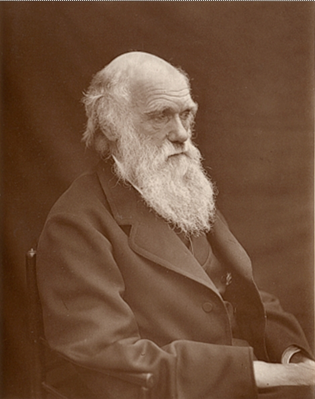
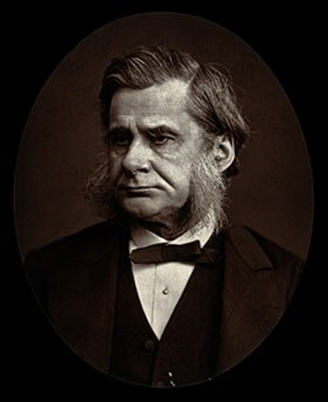
a)Thomas Henry Huxley b) Charles Darwin
a) https://en.wikipedia.org/wiki/Thomas_Henry_Huxley b) https://darwin-online.org.uk
Huxley coined the term “agnostic” in 1869. He states: “When I reached intellectual maturity and began to ask myself whether I was an atheist, a theist, or a pantheist… I found that the more I learned and reflected, the less easy the answer became.” According to Huxley, proponents of these differing positions, despite their apparent disagreements, shared a common assumption—one with which he did not agree: they were entirely certain that they had attained a form of “inner knowledge,” that is, that they had, in one way or another, resolved the problem of existence. By contrast, he maintained that he had not, and held a firm conviction that the problem itself was inherently insoluble [16].
Although agnosticism has often been classified among forms of contemporary atheism, the Catholic Encyclopedia presents a different perspective. It states: “The agnostic is not an atheist. The atheist denies the existence of God, whereas the agnostic acknowledges ignorance regarding His existence. For the latter, God may exist, but human reason is incapable of proving or disproving this [17].”
Atheism in Antiquity
Jan N. Bremmer notes that the French historian Lucien Febvre presented a pioneering study in 1942 on Rabelais, in which he concluded that atheism was not a prevailing phenomenon during the middle Ages. Febvre explained this absence through what may be described as a form of “mental blockage,” whereby Christianity constituted a comprehensive framework encompassing both individual and social life [18].
Religious festivals structured the rhythm of the annual calendar, while the fundamental stages of human life—such as birth, marriage, and death were closely tied to religious practices. The presence of religion was not limited to major occasions; rather, it extended into the details of everyday life, under the dominance of the Church over the public sphere, where the ringing of its bells continually reminded people of its presence and influenc [19].
In light of this profound interconnection between religion and all aspects of life, Febvre argues that it was not possible to conceive of medieval society independently of Christianity; indeed, thinking outside this framework was nearly impossible within that historical context[20].
Subsequent studies have offered partial revisions of Lucien Febvre’s conclusions; however, his central thesis continues to enjoy considerable acceptance. In this context, antiquity does not appear fundamentally different from the middle Ages in terms of the pervasive presence of religion and its dominance over public life. The Greeks and Romans lived in a highly religious environment, where temples were widespread in public spaces, coins were adorned with images of deities, and the annual calendar was structured around religious festivals and celebrations. Moreover, rituals accompanied the major transitions in human life [21].
Within this context of deep religious saturation, atheism did not emerge as a popular ideology with a clear social presence or a substantial base of adherents. Rather, its appearance was limited to exceptional individual cases, represented by certain figures who dared to express doubts or disbelief, as well as by a number of philosophers who proposed theoretical explanations concerning the origins of the gods and the nature of religion—often without being accompanied by a comprehensive practical rejection of religious practices.
When atheism was referenced during these periods, it frequently appeared in the form of what may be described as “soft atheism,” or within an accusatory framework used to discredit opponents and undermine their social standing [22].
Nevertheless, the presence of doubt or disbelief cannot be excluded from human history; however, its expression has remained closely tied to the historical and cultural contexts that determine the extent to which it is accepted or suppressed. Some historical periods were more open to dissenting views, whereas others imposed stricter limitations upon them.
Moreover, what may have been consideredalbeit with difficultya philosophically acceptable interpretation of the gods or the origins of religion in one era could later be reinterpreted as a form of atheism. This underscores the importance of accounting for temporal differences when examining the development of atheism, as well as understanding how later Greek and Roman thinkers reinterpreted the ideas of their predecessors within new intellectual frameworks [23].
The Epicurean philosopher Philodemus (c. 110–35 BCE)[24] proposed a classification of forms of atheism in antiquity, distinguishing between three main categories. The first category includes those who adopt an agnostic position, considering the existence or nature of the gods to be unknowable or indeterminate. The second category consists of those who explicitly deny the existence of the gods, adopting a clear and direct stance of rejection. The third category comprises individuals who do not openly declare their denial, but instead imply it indirectly through their views or writings[25].
This classification reflects an early awareness of the diversity of non-religious positions and distinguishes between varying degrees of expressing atheism, depending on the prevailing intellectual and social contexts of the time.
The Classical Era
The early signs of atheism began to emerge in ancient Greece, particularly in the city of Athens during the second half of the fifth century BCE, within the context of the flourishing of philosophical thought and rational debates concerning nature and existence. However, the first figure associated with this tendency was not Athenian, but rather the philosopher Protagoras[26] (c. 490–420 BCE), from the city of Abdera in northeastern Greece the same city in which Democritus (c. 460–400 BCE) was later born[27].
This classification reflects an early awareness of the diversity of non-religious positions and distinguishes between varying degrees of expressing atheism, depending on the prevailing intellectual and social contexts of the time.
The Classical Era
The early signs of atheism began to emerge in ancient Greece, particularly in the city of Athens during the second half of the fifth century BCE, within the context of the flourishing of philosophical thought and rational debates concerning nature and existence. However, the first figure associated with this tendency was not Athenian, but rather the philosopher Protagoras (c. 490–420 BCE), from the city of Abdera in northeastern Greecethe same city in which Democritus (c. 460–400 BCE) was later born.
Protagoras is considered one of the earliest thinkers to articulate a critical stance toward the question of the gods, as he is well known for his agnostic position, in which he questioned the possibility of attaining certain knowledge regarding the existence or nature of the gods. As for Democritus, although his natural philosophy based on atomism brought him closer to this line of thought, he was not explicitly classified as an atheist. Nevertheless, his ideas contributed to the development of more rational approaches to explaining the universe, moving away from mythological interpretations [28].
One of the most prominent indications of this intellectual transformation is found in what is attributed to Protagoras in the opening of his work On the Gods. This passage reflects the limits of human knowledge in metaphysical matters, as he acknowledges his inability to determine with certainty either the existence of the gods or their nature, attributing this to the obscurity of the subject, the brevity of human life, and the numerous obstacles that hinder the attainment of certainty in such questions[29].
This intellectual orientation reflects the early transition of Greek thought from traditional religious explanations toward critical rational approaches, which later paved the way for more explicit forms of religious skepticism and contributed to the formation of the foundational philosophical discourse on faith and atheism in Western civilization[30].
Ultimately, there is only one passage that contains explicitly atheistic content, and it is useful to quote it in full. In a fragment transmitted in the Christian era from the tragic play Bellerophon, which was likely performed around 430 BCE[31], Bellerophon himself declares at the beginning of the play:
(Bellerophon was known as a prince distinguished by his beauty and bravery. It is said that he accidentally killed a man, and as a result, his father sought to remove him from the city and send him to another kingdom. However, the king’s wife became infatuated with Bellerophon, and when he rejected her advances, she decided to take revenge by falsely accusing him of attempting to seduce her. The king, in turn, sought to punish himan episode that bears a striking resemblance to the story of the Prophet Joseph in Islamic tradition.) [32].
Does anyone claim that there are indeed gods in heaven? There are not—there are not—if one is willing to refrain from relying blindly on outdated reasoning. Consider this for yourselves; do not base your judgment solely on my words.
I observe that tyranny kills many people and deprives them of their possessions. Tyrants break their oaths in order to plunder cities, and in doing so, they often prosper more than those who live quietly and devoutly from day to day. I also observe that small cities which honor the gods are often subjugated by larger, more impious ones, simply because they are overcome by superior force.
Furthermore, if a person were idle and merely prayed to the gods without working to secure a livelihood, one would expect [lacuna in the text] to uphold religion and prevent misfortune. [33].

This passage was previously attributed to the sophist Critias (c. 450–403 BCE), one of the most prominent members of the group known as the “Thirty Tyrants” an oligarchic regime that seized power in the aftermath of the Peloponnesian War and became notorious for its oppressive and corrupt rule. This context made the satirical tone of the passage consistent with Critias’ historical reputation.
However, his name was mentioned only once as a possible author, whereas Euripides was cited twice, which has generated debate regarding its authorship. Modern scholarship suggests that it is unusual for a single individual to introduce such a controversial theory without relying on prior ideas or intellectual traditions, as appears to be the case hereespecially since the passage reflects the views of multiple philosophers rather than a single perspective. Moreover, the character attempting to persuade another that crimes committed without witnesses would go unpunished seems closer to the conventions of satyr drama than to traditional tragedy.
Furthermore, the text contains words and expressions that appear exclusively in the works of Euripides, strengthening the likelihood that the passage belongs either to his lost play Sisyphus (c. 415 BCE) or, more plausibly, to his play Autolycus I (of uncertain date). Nevertheless, the most recent critical edition of Euripides’ fragments has once again attributed the passage to Critias, considering the opposing arguments insufficient.
This attribution appears to be partially valid, as the modern edition of Philodemus’ On Piety (519–541) shows that Epicurus cited Critias’ account of the gods as evidence for the implausibility of their commonly assumed existence. Additionally, lines 539–540 and 1185–1217 contain traces of the Sisyphus narrative, indicating that Critias’ reputation as an atheist was already established prior to its later Hellenistic biographical representations. Given the historical importance of this text in the development of atheistic thought, it warrants careful citation and analysis.
Philosophical Fragment
There was once a time when human life was disordered,
similar to that of animals and governed by force,
when there was no reward for the virtuous
nor any punishment for the wicked.
Then, I think, humans decided to establish laws
as instruments of punishment, so that Justice (Dikē) might rule
and keep Crime and Violence (Hybris) in subordination.
They punished those who committed wrongdoing openly.
But since laws restrained only overt acts of violence,
people continued to commit them in secret. Then, I believe,
a wise and clever-minded individual
invented for mortals the fear of the gods,
so that the wicked might be deterred, even if
they acted, spoke, or thought in secrecy.
From this source, he introduced the notion of the divine:
there exists a deity (daimōn) who enjoys eternal life,
who hears and sees with the mind, whose thought
and awareness extend to all things, bearing a divine nature.
He hears whatever is spoken among mortals
and perceives whatever is done.
Even if one secretly devises evil,
this does not escape the gods,
for they possess knowledge.
With such words, he presented the most persuasive teaching
and concealed the truth beneath a fabricated narrative.
He claimed that the gods dwell in a place
where they would inspire the greatest fear among humans
from where, as he knew, arise human fears
and the misfortunes of life:
from the heavens above, where lightning flashes
and thunder strikes with terrifying force,
and where the sky, with its starry expanse,
appears as a magnificent and orderly structure.
From there also proceeds the radiant course of the sun
and the rain that nourishes the earth.
Thus, I believe, it was in this way
that someone first persuaded mortals
to believe in the existence of the gods[34].
In this extended passagelikely derived from Sisyphus, one of the most intellectually sophisticated figures in Greek mythologywe encounter one of the earliest articulations of the idea that religion, and particularly the concept of the gods, may have been invented as a mechanism to ensure moral and socially acceptable behavior among humans a notion that later became widely disseminated.
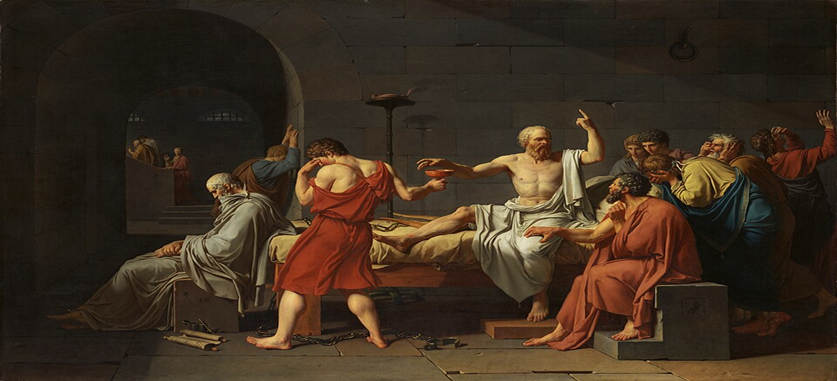
Nevertheless, the combination of the social authority of traditional religious beliefs and the influence of Platonic theology contributed to the relative rarity of “genuine” atheists in the ancient Greek world. Although Socrates was accused of impiety, heresy, and atheism, he in fact advocated for a form of unity in the conception of the divine and rejected both polytheism and the anthropomorphic representation of gods.
This case illustrates how the very definition of atheism in that period was fluid and context-dependent. The example of Socrates, along with subsequent historical instances, demonstrates how accusations of atheism were often shaped by doctrinal disagreement rather than by the actual denial of divinity. For instance, Christians were at times accused of atheism by Jews, while Jews were later accused of atheism by Christians. Thus, within different religious traditions, the label “atheist” was frequently applied to others whose beliefs did not conform to one’s own.
As our survey has shown, antiquity holds a particular importance in the history of atheism from at least three main aspects. First, the Greeks coined tpt of theoretical atheism, an achievement considered one of the most significant events in the history of religions, as it represented a turning point in philosophical thinking about faith and the gods. Third, the Greeks and Romans both pagans and Christians recognized the practical utility of the term 'atheist' as a tool for classifying opponents, which allowed its use in various social and political contexts. Thus, the invention of atheism paved the way toward greater intellectual freedom, yet at the same time, it gave society a new means to identify and label dissenters, affirming that intellectual progress rarely comes without a price[35]
In conclusion, we might venture to say that atheism in antiquity from the Sophists and before them, all the way to the Enlightenment and beyond was restricted to philosophers, thinkers, and writers only, without there being other cases, trends, collective incidents, or a continuous phenomenon in societies at that time. Rather, it was almost exclusively individual cases limited to writers, philosophers, thinkers, and scientists.
Section Two: Technological Development and the Reconfiguration of Social Structure
Since the late twentieth century, the world has witnessed an unprecedented acceleration in technological development, particularly with the spread of the internet, the digital revolution, and artificial intelligence. The impact of these transformations has not been limited to economic or industrial fields alone, but has extended to include the social and cultural fabric of societies.
The sociologist Manuel Castells argues that contemporary society has become what is known as the 'network society,' where digital networks form the fundamental structure of social and cognitive relationships. In this context, traditional institution including religious institutions are no longer the sole source of knowledge and values; rather, knowledge has become accessible through multiple digital spaces[36].
This shift has led to a decline in the knowledge monopoly of religious institutions, as individuals have become able to access multiple interpretations of religious texts, or alternative philosophical and scientific perspectives. With the expansion of this knowledge space, what might be called 'digital religious Pluralism' all began to emerge, where people are exposed to a wide spectrum of ideas and ideals, causing them to constantly reconsider their beliefs.
These adjustments can be explained entirely through an analytical framework based on 3 interrelated levels: first, epistemological phase, where technology deconstructs monopoly of non-mundane expertise and promotes individualism within its production. and third, the pragmatic level, where spiritual practice itself is transformed in multiple curved digital spaces. In this experiment, kinship does not so much cause the decline of religion as contribute to its reconstruction within the new network structure.
In addition, time has contributed to the strengthening of individualism in modern societies. Instead of relying on spiritual enterprises and traditional institutions, individuals relied on more than one source of understanding to form their personal beliefs Sociologist Anthony Giddens argues that early modernity gave an upward thrust to what he calls 'social unity' In a soft reflexive way".[37].
At its benign, those changes can be understood through an analytical framework based primarily on 3 interconnected levels: first, epistemological levels, where virtual age leads to disruption of monopoly of spiritual understanding and provides multiple possessions of interpretation, strengthening individualism in shaping digital values in a decentralized way converted space is; and third, the practical level, where spiritual practice itself is transformed through changes in flexible virtual environments.
The influence of generation on this experience cannot be reduced to the degradation of religiosity; Rather, it should be understood as a multidimensional reconstruction that simultaneously touches on the structures of information, authority, and religious practices.
Section Two: Technology and the Transformation of Religious Practices
century has witnessed rapid growth in technology and artificial intelligence, often resulting in radical changes in many aspects of everyday life, such as how people practice their faith, interpret religious texts, and interact with spiritual groups. where peoplew methods not now available before influenced bearing systems and spiritual practices at once. [38].
Technological development likewise creates new avenues for secular expression and religious experience, along with virtual groups discussing religious issues, or packages that seek to provide religious moderation through artificial intelligence, opening up new horizons for interfaith and interfaith experiences. At the same time, those changes raise complex ethical questions about the limits of using technology in the secular realm, including the credibility of religious recommendations, the authenticity of spiritual enjoyment, and the potential replacement of traditional human interactions with automated virtual relationships [39].
Moreover, some scholars point out that artificial intelligence is no longer the easiest way to transform religion, but that it poses profound epistemological and logistical challenges. This highlights the dynamic tension between traditional religion and technological innovation, which requires a deeper understanding of how religious institutions and individuals adapt to these adaptations [40].
Major Scientific and Technological Developments in the Modern Era
1. Advances in Genetic Engineering and CRISPR Technology
One of the most significant scientific achievements of the twenty-first century is the development of CRISPR-Cas9 gene-editing technology, which enables researchers to modify DNA with unprecedented precision. This innovation opens wide-ranging possibilities for treating genetic diseases, improving agricultural crops, and advancing biological research more broadly.
Beyond its applications in medicine and agriculture, this development has also sparked important ethical debates regarding the limits of intervention in the human genome and the implications of such technologies for the future of humanity[41].
2. Advances in Medical Technology and Artificial Intelligence in Healthcare
Medicine has seen extensive technological improvements with the use of artificial intelligence in diagnosis and treatment. These trends include high-precision analysis of scientific images, with X-ray scans and tumor detection, as well as improving better scientific tools and scientific choice support structures that reduce scientific errors and improve treatment outcomes.
3. The Fourth Industrial Revolution and Applications of Artificial Intelligence
With the advent of the fourth industrial revolution, artificial intelligence, Internet of Things (IoT), and automation have emerged as essential linkages in modern industries and these technologies have contributed to increased productivity and appropriate business processes are capable of performing complex responsibilities.
4. The Integration of Biotechnology and Materials Science
The convergence of biotechnology and materials science has led to advanced innovations, including targeted drug delivery systems and tissue engineering techniques aimed at producing complex human organs in laboratory settings. These developments represent a significant step toward personalized medicine and regenerative therapies, paving the way for a new era in healthcare.
5. Advances in Communication and 5G Networks
Fifth-generation (5G) networks have brought about a major transformation in mobile communication capabilities through higher data transmission speeds and lower latency. This enables applications such as augmented reality, remote device control, and the expansion of the industrial internet, thereby opening new avenues for innovation in education, healthcare, and smart transportation.
Section Three: Scientific Rationality and the Technological Challenge to Religion
Technological development is closely related to the expansion of medical rationality, which has emerged as a defining feature of modern societies. With the wide spread of clinical understanding through web-digital structures, individuals are increasingly exposed to clinical principles and natural factors of cosmic phenomena.
Sociologist Max Weber argues that the process of “disillusionment with the field” is one of the major consequences of modernization, where natural social phenomena are explained by clinical frameworks instead of non-secular or metaphysical reasons[42].
This process becomes more intense in the context of technological revolution, as technology provides advanced cognitive tools for knowledge of the world this can lead to the return of certain traditional metaphysical models or even their reinterpretation in line with cutting-edge medical expertise.
Section Four: The Impact of Scientific Advancement on Religions
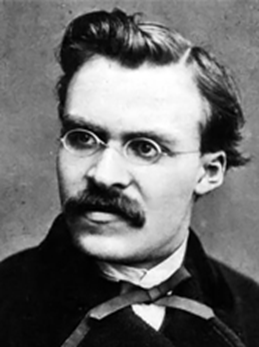
“God is deadand we have killed him.”
Friedrich Nietzsche
“God is deadand we have killed him.”
Friedrich Nietzsche
Concepts of God have undergone remarkable refinements throughout the recorded period, beginning with the biblical genealogy, where, in some interpretations, they gradually evolved from early representations characterized by the use of strict genealogical features to more abstract ideas that emphasize the mercy, justice, and universality.
At the same time, moral systems are also developing within human societies, as evidenced by the erosion of certain types of traditional judgment and the emergence of broad moral frameworks based on distinctively human values that transcend the narrow boundaries of tribal and cultural affiliation[43].
These changes are also partly linked to structural changes in societies, which shift primarily from agricultural economies to trading systems and finally to economies based entirely on perception.
In this context, some people generally tend to reduce their trust in non-secular governments and institutions in guiding daily life. But this shift does not entail a decrease in moral commitment; instead, it may reflect a reconfiguration of its sources and contextual frameworks within new social and cultural contexts[44].
The functions of religion can be summarized as follows: explaining the world and the universe; alleviating anxiety through rituals[45]; providing comfort in the face of pain and death; maintaining social order; promoting political obedience[46]; guiding behavior toward outsiders; and, in some cases, legitimizing warfare[47.[
Accordingly, rates of atheism increased during the second decade of the twenty-first century. According to a report prepared by a center for religious studies, the proportion of atheism worldwide has reportedly doubled. However, such estimates remain uncertain and are not based on fully reliable or comprehensive data, largely due to the relative lack of extensive global surveys.
This limitation is not necessarily the result of shortcomings on the part of researchers, but rather reflects practical constraints—suggesting that actual figures may be significantly higher than currently reported. First, atheists often constitute a relatively small proportion within the populations surveyed, making it difficult to obtain sufficiently large samples for reliable statistical analysis unless the overall sample size is exceptionally large.
Second, as a result of this challenge, some studies have tended to group atheists together with agnostics and individuals who are not interested in religion under a broad and undifferentiated category labeled “no religion,” a classification noted early on by Vernon. However, such aggregation reduces analytical precision and obscures important conceptual distinctions between these groups[48].
The third factor relates to the high cost of large-scale survey research. Increasing the sample size and the number of questions significantly raises overall costs. Moreover, accurately identifying atheist individuals requires the inclusion of specialized and direct questions, separate from those designed to analyze factors associated with atheism. This, in turn, adds to both the methodological and financial complexity of such studies[49].
Accordingly, a report issued by the Pew Research Center on June 9, 2025, examined the global religious landscape over the period from 2010 to 2020. The report was titled:
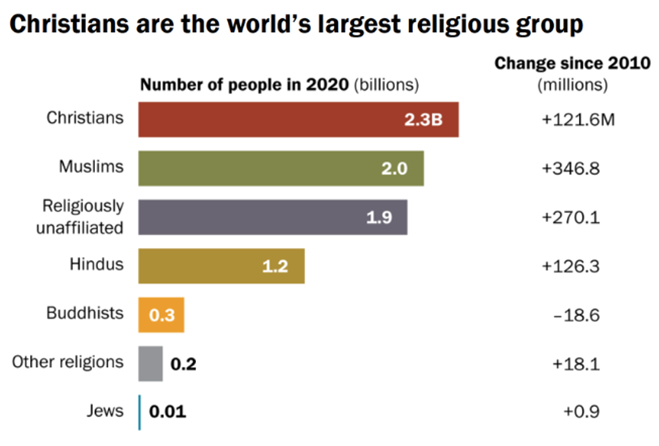
How the Global Religious Landscape Changed from 2010 to 2020: Muslims Grew Fastest; Christians Lagged Behind Global Population Growth[50].
The report concluded the following: [51].
Recent demographic data indicate the continued growth of major religious populations worldwide, albeit at varying rates. The number of Christians increased by approximately 122 million, reaching around 2.3 billion, thereby maintaining their position as the largest religious group globally. However, this growth did not keep pace with overall global population growth, resulting in a relative decline in their percentage share.
In contrast, Muslims recorded the highest growth rate among religious groups, with an increase of approximately 347 million adherents—exceeding the combined growth of all other religions. This was reflected in a rise in their share of the global population by 1.8 percentage points, reaching 25.6%.
The category of individuals unaffiliated with any religionoften referred to as the “religiously unaffiliated” or “nones” also experienced notable growth. Their numbers increased by approximately 270 million, reaching around 1.9 billion. As a result, their share of the global population rose to 24.2%, making them, alongside Muslims, the only group to achieve a relative increase in their proportion of the world’s population.
In response to the previous interview, it should be quoted that these figures are by no means unique and in fact may be significantly higher depending on the factors mentioned earlier and additional concerns.
First, many individuals who profess atheism may also chorus to publicly assert their departure from religion due to fear, primarily to hide or maintain their ideals privately. Second, there may be a lack of officially identified organizations or organizations that systematically detect, promote, and document atheism, making accurate records difficult nationwide and globally.
With regard to other religious groups, the number of Hindus grew at a rate close to that of the global population, increasing by approximately 126 million to reach around 1.2 billion, while their share remained relatively stable at about 14.9%. Jews, on the other hand, maintained a relatively stable proportion, with a population of approximately 14.8 million, representing around 0.2% of the global populationthe smallest share among the religious groups considered.
Similarly, other religious groups combinedincluding Baha’is, Sikhs, Jains, and followers of folk religionscontinued to grow in line with overall population growth, while their share remained stable at approximately 2.2% of the global population.
Overall, approximately 75.8% of the global population identified with a religious affiliation by 2020, while 24.2% were religiously unaffiliated, making them the third-largest group after Christians and Muslims. It is also noteworthy that since 2010, the proportion of religiously affiliated individuals has declined by about one percentage point, accompanied by a corresponding increase in the share of the unaffiliated.
The growth of the religiously unaffiliated represents a notable trend, despite the demographic challenges it faces, such as higher average age and lower fertility rates. This growth is partly attributed to the disaffiliation of individuals particularly from Christianitywho have moved away from formal religious identification, thereby contributing to the expansion of this group at the global level.
Changes in population size are typically associated with a set of key demographic factors, most notably fertility and mortality rates, as well as the age structure of a given society. Societies characterized by a younger population structure and a higher proportion of children tend to experience faster growth rates compared to those with aging populations or those affected by elevated levels of premature mortality due to war, disease, or famine.
When the number of births exceeds the number of deaths, demographers refer to this condition as “natural increase,” which represents one of the primary drivers of population growth. However, the rise in the number of individuals who are not affiliated with any religion cannot be explained by this factor alone.
At the global level, this group exhibits demographic characteristics that are less conducive to growth, as it tends to have an older age profile and lower fertility rates compared to major religious populations such as Christians, Muslims, and Hindus.
Accordingly, the notable growth of the religiously unaffiliated acquires particular significance, as it occurs despite what demographers describe as “unfavorable” conditions for population growth, in contrast to religious groups that benefit from higher fertility rates and younger age structures.
This relative expansion in the number of religiously unaffiliated individuals is largely attributed to the phenomenon of “religious switching,” that is, the transition of individuals from religious affiliation to non-affiliation, particularly among those raised in Christian contexts. In other words, the increasing number of individuals who relinquish their religious identity has directly contributed to the growth of this group at the global level.
Although demographic factors—such as aging populations and lower fertility rates—slow the pace of growth among the religiously unaffiliated, the impact of individual shifts in religious identity remains a decisive factor in explaining the continued expansion of this group within the global population.
The category of religiously unaffiliated individuals recorded the most significant increases compared to other religious groups at the country level. Their share rose by at least five percentage points in 35 countries worldwide, reflecting a clear demographic shift in patterns of religious affiliation.
Several countries exhibited particularly high growth rates in this category, including the United States, which recorded an increase of 13 percentage points, Uruguay (16 points), Chile (17 points), and Australia (17 points) among the highest increases observed globally.
By 2020, the United States had become the second-largest country in the world in terms of the number of religiously unaffiliated individuals—after China—surpassing Japan. This reflects the rapid expansion of this group, particularly within Western societies.
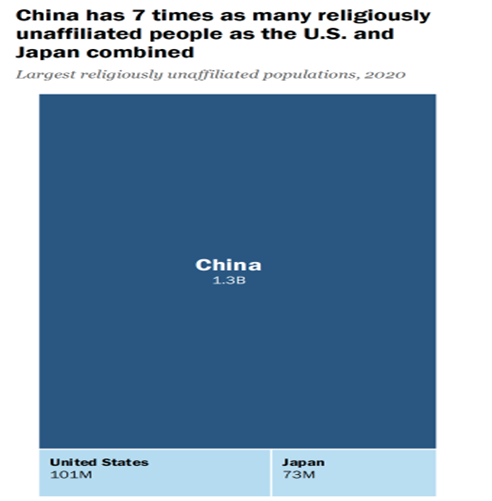
Comparative figures suggest that the large range of religiously unaffiliated people in China in some ways surpassed other countries, surpassing mixed families in the United States and Japan by about seven times.
The number of religiously unaffiliated individuals in the United States reached approximately one zero million using 2020, representing a significant increase of approximately 97% compared to 2010. In Japan, parenthood was approximately seventy-three million, approximately 8% moderately over the same period, while representing less than identify as a, or religiously unaffiliated
China, meanwhile, maintained its position from 2010 to 2020 as the u S.S. with a considerable variety of religiously unaffiliated people, totaling about 1. Three billion about 90% of the population. These data underline that the phenomenon of religious affiliation takes on several dimensions depending on the cultural, political and social context of each us.
The gradual decline in secular affiliation has contributed to outstanding changes in the international secular panorama, with religious non-affiliation representing the most compared to 2010, including an increase in the size of nations and a decrease in the diversity of Christian-majority nations.
The data indicate that Christians constituted the majority in approximately 59.7% of the regions included in the study. However, this presence declined over the following decade, as the number of countries and territories with a Christian majority decreased from 124 to 120 by 2020. In several countries, the proportion of Christians fell below half of the population, most notably in the United Kingdom (49%), Australia (47%), France (46%), and Uruguay (44%).
In these contexts, the share of the religiously unaffiliated rose to 40% or more, while the proportions of adherents to other religions—such as Islam, Hinduism, Buddhism, and Judaism—remained relatively limited, not exceeding a combined total of 11% of the population.
Conversely, some countries experienced profound shifts toward religious non-affiliation, with the unaffiliated becoming the majority in the Netherlands (54%), Uruguay (52%), and New Zealand (51%). As a result, the number of countries and territories with a majority of religiously unaffiliated individuals increased from seven to ten, following the inclusion of these countries alongside others where this pattern had already been observed, such as China, North Korea, the Czech Republic, Hong Kong, Vietnam, Macao, and Japan.
By contrast, there was no significant change in the number of countries where other religions constituted the majority. The number of Muslim-majority countries remained at 53, Buddhist-majority countries at 7, and Jewish-majority countries at one, with similar stability observed for other religious traditions.
These findings are based on a comprehensive analysis conducted by the Pew Research Center, drawing on more than 2,700 data sources, including census data and survey reports, some of which were delayed due to the COVID-19 pandemic. This study forms part of the “Pew–Templeton Global Religious Futures Project,” which aims to understand the dynamics of religious change worldwide and its social implications.
Although a significantly larger number of individuals are raised within religious frameworks compared to those raised without religious affiliation, the majority of adults still retain a religious identity in adulthood. Nevertheless, recent data indicate that the balance between these two groups is undergoing a gradual shift.
Drawing on survey data from 117 countries and territories, the relationship between childhood religious background and adult religious affiliation was analyzed. The analysis focused on individuals aged 18 to 54, as religious switching tends to be more common in earlier stages of life, although it can occur at any age.
The findings reveal a clear trend in which rates of religious disaffiliation exceed rates of affiliation. For every individual who adopts a religion after being raised without one, approximately 3.2 individuals leave religion after being raised within it. As a result, the religiously unaffiliated category experiences the largest net gains from religious switching.
In contrast, Christian groups record the largest net losses, with approximately 3.1 individuals leaving Christianity for every one person who joins it. Most of these individuals transition into non-affiliation, while others convert to different religions.
Similarly, Buddhists exhibit a comparable pattern, with a higher number of individuals leaving than joining (1.8 versus 1.0). A similar trend—though less pronounced—applies to Hindus. In the case of Muslims, however, the pattern of religious switching appears to move in the opposite direction. Nevertheless, the overall scale of religious switching within Muslim and Hindu populations remains relatively limited, resulting in a minimal net impact on the size of these groups.
Taken together, these findings indicate that religious switching constitutes a decisive factor in reshaping the global religious landscape, particularly with regard to the rapid growth of the religiously unaffiliated.
In addition, another report issued by the World Christian Database provides estimates of the number of adherents of major religions, alongside the number of individuals who are not affiliated with any religion, while also offering future projections of these populations through the year 2075. The report is presented under the following title:
Status of Global Christianity, 2026, in the Context of 1900–2075.GLOBAL POPULATION, INDICATORS, AND CITIES 1900 1970 2000 2020 Trend % p.a. 2026 2075 Total population 1,619,625,000 3,694,684,000 6,171,703,000 7,887,001,000 0.86 8,300,678,000 10,250,496,000 Adult population (over 15) 1,073,646,000 2,300,913,000 4,296,697,000 5,851,941,000 1.24 6,300,354,000 8,403,653,000 % with some secondary education 1 13 52 65 0.28 66 74 Refugees per 100,000 - 5 195 290 7.60 450 - Carbon dioxide emissions (t per person 1.6 4 4 4.3 0.74 4.5 5.7 Infant mortality per 1,000 live births 143 85 52 20 -1.74 18 10 Urban population (%) 14.4 36.6 46.6 56 0.75 58.6 80 Global urban population 232,695,000 1,351,007,000 2,875,602,000 4,418,052,000 1.61 4,862,300,000 8,200,397,000 Cities over 1 million 20 145 371 597 2.46 670 1370 Under 50% Christian 5 65 226 345 2.80 407 990 GLOBAL RELIGION Religious diversity 2.7 4.3 4.5 4.4 -0.05 4.4 4.3 Religionists 1,616,370,000 2,985,919,000 5,385,821,000 6,982,224,000 0.95 7,388,710,000 9,534,076,000 Christians 558,346,000 1,222,867,000 1,993,436,000 2,526,029,000 0.95 2,673,989,000 3,675,544,000 Muslims 200,301,000 576,995,000 1,311,342,000 1,917,487,000 1.57 2,105,142,000 3,422,840,000 Hindus 202,976,000 455,729,000 842,884,000 1,097,448,000 0.76 1,148,172,000 1,193,892,000 Buddhists 126,946,000 234,130,000 448,943,000 528,137,000 0.24 535,726,000 430,019,000 Chinese folk-religionists 379,974,000 238,645,000 422,590,000 456,538,000 -0.27 449,231,000 354,417,000 Ethnoreligionists 117,313,000 171,674,000 226,919,000 293,413,000 0.88 309,298,000 267,472,000 New Religionists 5,986,000 39,557,000 63,518,000 68,256,000 -0.07 67,964,000 57,773,000 Sikhs 2,962,000 10,668,000 21,576,000 29,292,000 1.10 31,276,000 45,899,000 Jews 11,725,000 13,917,000 12,942,000 15,239,000 0.57 15,765,000 20,439,000 Nonreligionists 3,255,000 708,765,000 785,882,000 904,777,000 0.13 911,969,000 716,421,000 Agnostics 3,028,000 543,609,000 647,584,000 756,480,000 0.19 764,998,000 632,734,000 Atheists 226,000 165,156,000 138,298,000 148,297,000 -0.15 146,970,000 83,687,000
Source: https://www.worldchristiandatabase.org/static/downloads/Status-of-Global-Christianity-2026.2b54be19fc0c.pdf?utm
Based on the previous table, the category of individuals who are not affiliated with any religion—often referred to as the “religiously unaffiliated” or “nones”—constitutes the third-largest group globally, after Christians and Muslims. This category includes individuals who identify in surveys and censuses as having no religious affiliation, as well as those who explicitly describe themselves as atheists or agnostics[52].
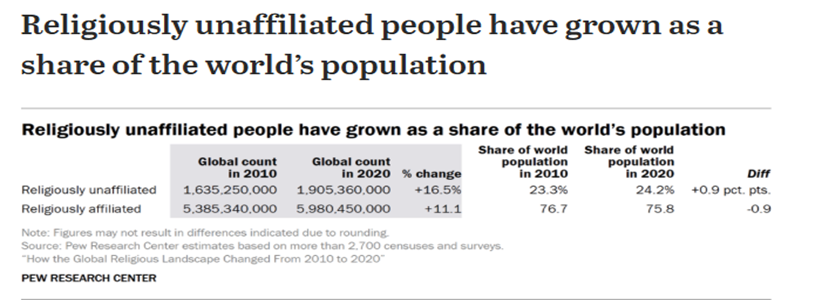
Over the decade spanning 2010 to 2020, this group experienced notable growth, with its population increasing by approximately 17%, rising from around 1.6 billion to 1.9 billion. This growth outpaced the rate of increase among religiously affiliated populations, which reached approximately 11% over the same period[53].
As a result, the relative share of the religiously unaffiliated within the global population increased from 23% in 2010 to approximately 24% by 2020, reflecting a gradual shift in patterns of religious affiliation at the global level[54].
Source: https://www.pewresearch.org/religion/2025/06/09/religiously-unaffiliated-population-change/
Regional Changes
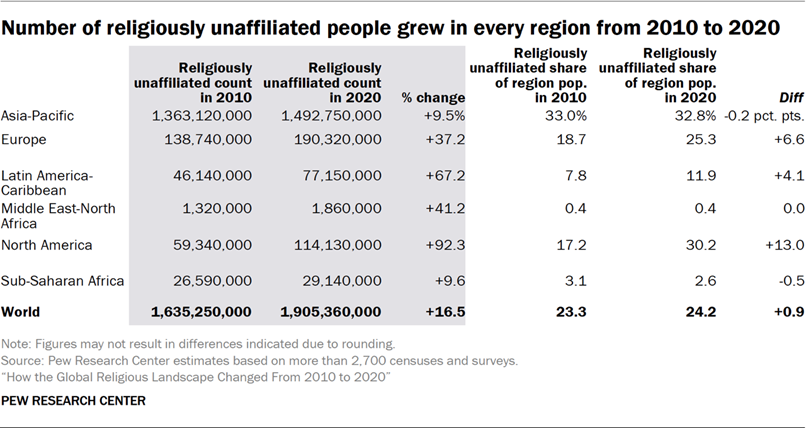
During the period between 2010 and 2020, the number of religiously unaffiliated individuals increased across all regions of the world without exception. This growth generally outpaced that of religiously affiliated populations in most regions, reflecting the global expansion of religious non-affiliation.
However, this trend does not apply uniformly. Both the Asia-Pacific region and Sub-Saharan Africa constitute notable exceptions, where the growth of religious populations has been relatively faster than that of the religiously unaffiliated. This suggests that religion remains a more deeply embedded and influential factor within these regional contexts.
Source: https://www.pewresearch.org/religion/2025/06/09/religiously-unaffiliated-population-change/
Regional and Demographic Distribution of the Religiously Unaffiliated
Different regions of the world exhibited clear variation in the growth rates of the religiously unaffiliated between 2010 and 2020. In North America, the size of this group nearly doubled, reaching approximately 114 million, representing an increase of 92%. Similarly, in Latin America and the Caribbean, their number rose to around 77 million, reflecting a 67% increase.
In the Asia-Pacific region, the number of religiously unaffiliated individuals reached approximately 1.5 billion, while in Sub-Saharan Africa it stood at around 29 million, with growth rates of about 10% in both regions. However, this growth remained slightly lower than the rate of increase among religiously affiliated populations in these regions.
In percentage terms, North America recorded the highest proportion of religiously unaffiliated individuals, accounting for 30% of the total population in 2020, an increase of 13 percentage points. Europe followed with approximately 25% (an increase of 7 percentage points), while Latin America and the Caribbean reached 12% (an increase of 4 percentage points). By contrast, the Asia-Pacific region and Sub-Saharan Africa experienced slight declines in these proportions, while the Middle East and North Africa remained largely stable.
Global Geographic Distribution
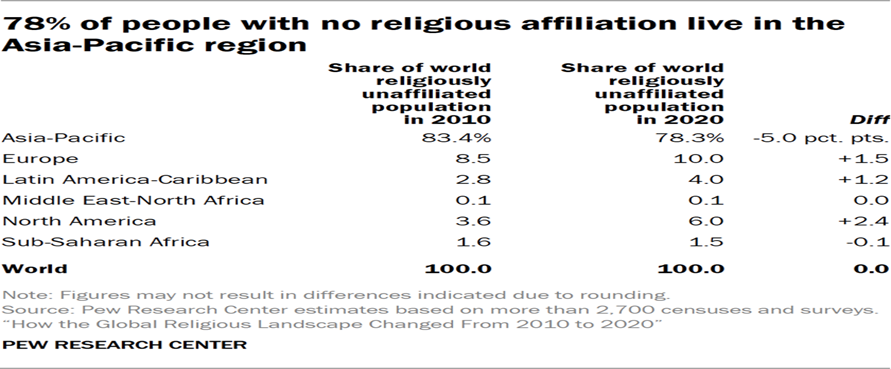
The majority of the religiously unaffiliated are concentrated in the Asia-Pacific region, where approximately 78% reside, although this represents a decline from 83% in 2010—the largest regional decrease recorded during this period. This shift is attributed to the increasing number of unaffiliated individuals in other regions, particularly in North America, Europe, and Latin America, driven by large-scale religious transformations, most notably the transition from Christianity to religious non-affiliation.
Europe ranks second in terms of hosting the religiously unaffiliated, accounting for approximately 10% of the global total, followed by North America (6%) and Latin America and the Caribbean (4%).
Country-Level Distribution
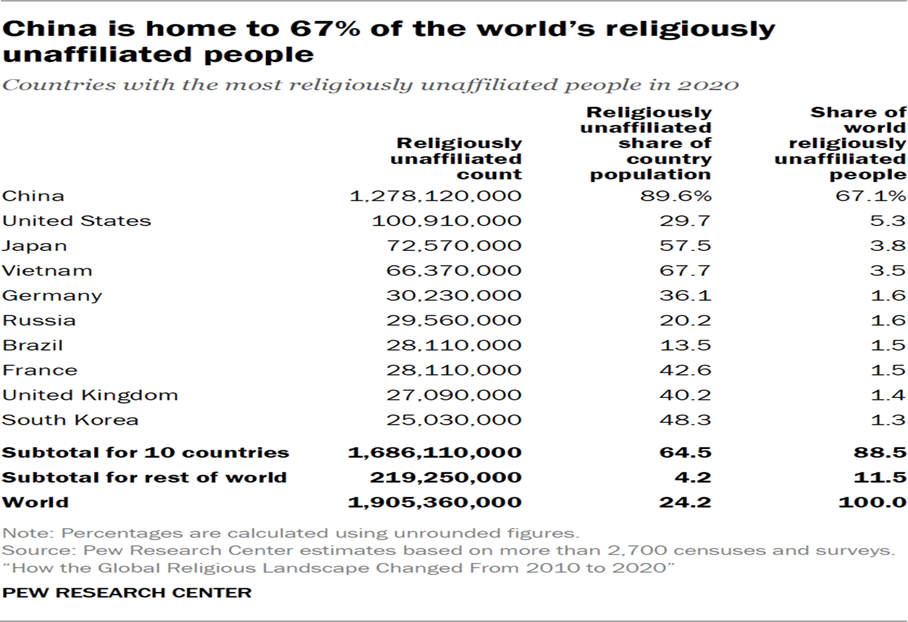
China remains the country with the largest number of religiously unaffiliated individuals, with approximately 1.3 billion people—representing nearly two-thirds of the global total. The United States ranks second, with around 101 million unaffiliated individuals, although this accounts for only about 5% of the global share.
Overall, nearly 90% of the religiously unaffiliated population is concentrated in just ten countries, indicating a pronounced geographic concentration of this phenomenon, alongside significant variation in its distribution across different countries and regions.
Source: https://www.pewresearch.org/religion/2025/06/09/religiously-unaffiliated-population-change/
Source: https://www.pewresearch.org/religion/2025/06/09/religiously-unaffiliated-population-change/
Largest Changes in the Share of the Religiously Unaffiliated
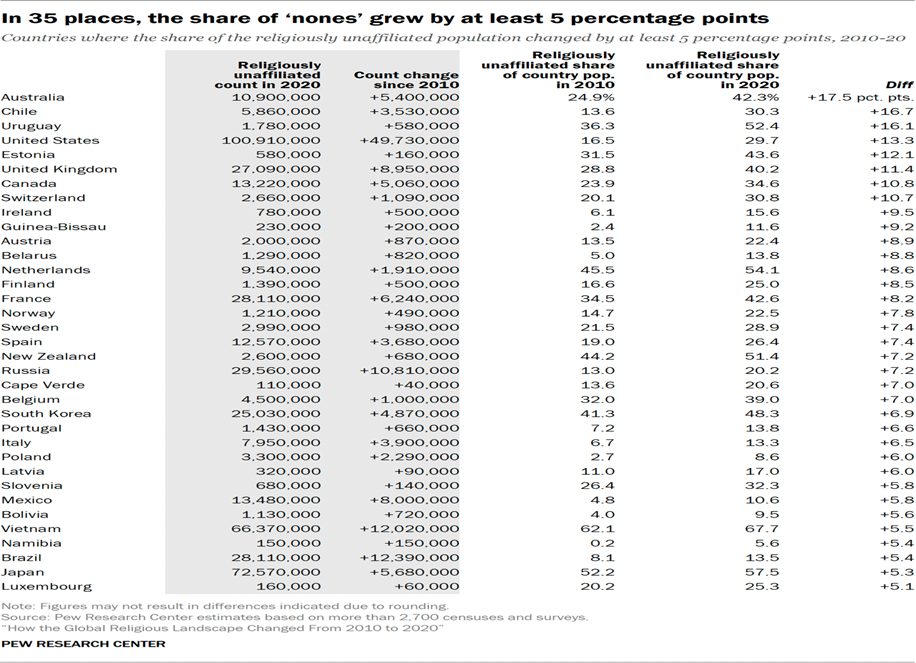
The proportion of individuals who are not affiliated with any religion increased significantly between 2010 and 2020, with at least a five-percentage-point rise recorded in 35 countries. Notably, no country experienced a comparable decline of five percentage points or more during the same period.
Countries that recorded the largest increases in the number of religiously unaffiliated individuals are distributed across the globe, with the exception of the Middle East and North Africa. Most of these countries are located in Europe, where historically large Christian majorities have experienced parallel declines in Christian affiliation over the same decade. Religious disaffiliation from Christianity has been a widespread and long-standing phenomenon in many of these regions.
In terms of the highest growth rates, Australia and Chile each recorded an increase of 17 percentage points, followed by Uruguay with a 16-point increase, while the proportion of the religiously unaffiliated in the United States rose by 13 percentage points.
These substantial increases have, in some cases, led to the religiously unaffiliated becoming the majority in certain countries and territories. By 2020, the number of regions where the unaffiliated constituted a majority had risen to ten, compared to seven in 2010. In countries such as Uruguay, the Netherlands, and New Zealand, the majority of the population reported no religious affiliation, joining China, North Korea, the Czech Republic, Hong Kong, Vietnam, Macao, and Japan, where unaffiliated majorities had already been established by 2010.
Source: https://www.pewresearch.org/religion/2025/06/09/religiously-unaffiliated-population-change/
Causes of Atheism
“The most formidable weapon against errors of every kind is reason. I have never used any other, and I trust I never shall.”
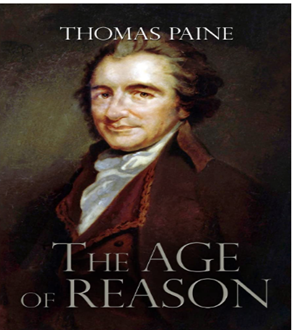
Thomas Paine, Age of Reason
Studies indicate that the religiously unaffiliated, including atheists, tend to be relatively younger compared to those affiliated with religious traditions. This can be partly attributed to the fact that younger individuals are often less aware of mortality and existential risks, making them more likely to adopt either belief systems or non-belief at earlier stages of life.
This observation is reflected in the well-known saying, “There are no atheists in foxholes,” which suggests that severe crises and life-threatening situations often lead individuals to turn to religious beliefs as a means of psychological coping and the alleviation of personal fear[55].
Research also indicates the presence of gender differences in the propensity toward atheism. Women, who are often more oriented toward intimate social relationships and caregiving roles, are less likely to identify as atheists compared to men.
Furthermore, atheism appears to be more prevalent among individuals who lack strong social or personal commitments, as the absence of close social bonds and reliance on others may provide greater freedom to adopt non-religious or non-belief perspectives[56].
At the societal level, the shift toward a less religious or more secular society is often understood as a long-term trend driven by scientific and social progress, which reduces the perceived need for religious belief. Evidence at both the individual and societal levels suggests that strong religiosity is associated with higher fertility rates, implying that the general decline in fertility may, in part, reflect processes of secularization and the weakening of religious influence in modern societies[57].
Evidence also suggests that one of the primary sources of atheism lies in weak or absent social commitments, which reduces the need for the secondary psychological compensation often provided by religious beliefs.
Moreover, a growing body of research highlights concerns that social commitments in many societies may be insufficiently strong to sustain long-term demographic stability[58].
This provides a new perspective for understanding secularization, as the decline in social commitments among individuals—associated with lower fertility rates and, potentially, the rise of modern institutions that have assumed part of these roles—can be interpreted as a distinct yet more precise expression of the movement toward secularization in contemporary societies[59].
Two - Reason, Faith And Revelation
... if devotion to truth is the hallmark of morality, then there is no greater, nobler,
more heroic form of devotion than the act of a man who assumes the responsibility
of thinking. ... the alleged short-cut to knowledge, which is faith, is only a short-circuitdestroying the mind.
—Ayn Rand, Atlas Shrugged[60]

Tertullian (c. 150–225 CE), one of the Church Fathers, represents a prominent example of Christian hostility toward reason, even within a religious context. He went so far as to defend religious paradoxes in an extreme manner arguably beyond what was typical even within Christianityyet he was not unique in his explicit critique of reason.
Many Christian thinkers openly acknowledged the tension between reason and faith, and in some cases, articulated a direct opposition to the primacy of reason.

https://www.thetorah.com/article/tertullian-father-of-western-christianitys-answer-to-the-jews
Tertullian took seriously the biblical assertion that God “destroys the wisdom of the wise and brings to nothing the understanding of the intelligent.” He argued that “philosophy provides heresies with their tools,” and concluded with a harsh denunciation, expressing a wish that afflictionor even plaguemight befall the philosopher Aristotle[61].
For example, Martin Luther described reason as “the devil’s bride,” a “beautiful harlot,” and “the greatest enemy of God.” He wrote: “There is nothing on earth, among all dangers, more perilous than a rich and clever mind, especially when it engages with spiritual matters concerning the soul and God. It is easier to teach a donkey to read than to blind such a mind and guide it rightly; for reason must be deceived, its sight obscured, and it must be destroyed.”
Luther ultimately concludes that “faith must trample all reason, all senses, and all understanding; it must disregard everything it perceives and desire to know nothing except the Word of God. [62]”
Martin luther
https://www.biography.com/religious-figures/martin-luther
Classical and Contemporary Teleology
The concept of “new teleology” refers to a form of teleological argument for the existence of God that is grounded in the order, overall structure, and fundamental laws of the universe, rather than focusing solely on the complexity of living organisms. This approach acknowledges that the classical arguments advanced by William Paley in the nineteenth centurybased on inferring design from the intricate structures of living beings are no longer sufficient in light of modern scientific developments.
It is no longer necessary to assume the existence of a direct designer for living organisms such as kangaroos, the eye of a hawk, or the immune system, as the emergence and complexity of these structures can now be explained through Charles Darwin’s theory of natural selection, supported by subsequent advances in modern genetics, including population genetics and molecular biology[63].
Molecular biology has contributed to a more precise understanding of the chemical mechanisms that govern gene function and their role in embryonic development, as well as various biological processes within cells. Detailed explanations of many of these processes have been established, making them a central focus of scientific research due to their significance in fields such as medicine and agriculture[64].
On this basis, new teleology does not rely on the functional appearance of biological organs as “designed,” but instead focuses on the overall structure of the universe and the order and precision it exhibits, as revealed by modern physics and cosmology. One of the central ideas invoked in this context is that of “fine-tuning,” which suggests that the physical laws and constants of the universe appear to be calibrated within a narrow range that permits the emergence of intelligent life.
However, this perspective does not necessarily conflict with the mechanistic character of modern biological explanations; rather, the two can be understood as representing different levels of analysis and interpretation[65].
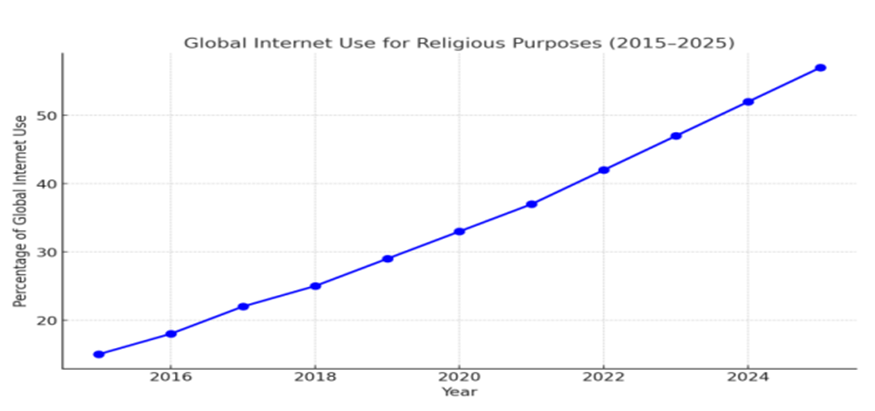
Description: A line graph showing the increasing trend of internet use for religious purposes,
including online worship services, religious education, and virtual religious communities. This
graph illustrates how the internet has become a significant space for religious engagement in the
21st century
file:///C:/Users/DELL/Downloads/1-10.pdf
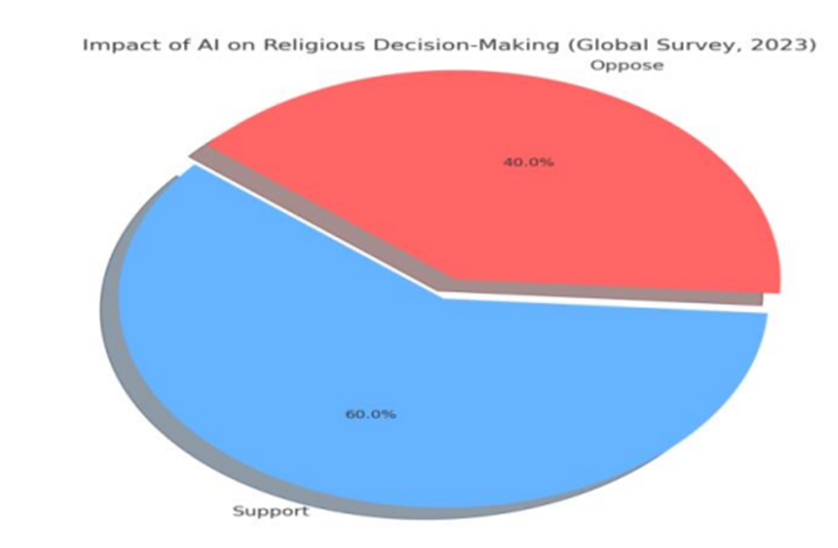
Graph 2: Impact of AI on Religious Decision-Making (Global Survey, 2023) Description: A pie chart depicting the percentage of people globally who support the use of artificial intelligence for religious decision-making (e.g., interpreting religious texts, giving advice) and those who oppose it. The chart shows a growing acceptance in younger generations
file:///C:/Users/DELL/Downloads/1-10.pdf
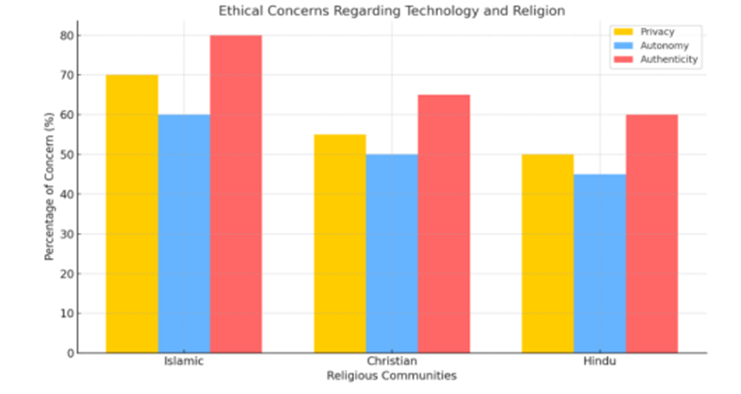
Graph 3: Ethical Concerns Regarding Technology and Religion
Description: A bar chart comparing the ethical concerns raised in various religious communities about the use of technology in religious practices, such as privacy, autonomy, and authenticity of religious teachings. The chart highlights key concerns, particularly in Islamic, Christian, and Hindu communities.
Source: file:///C:/Users/DELL/Downloads/1-10.pdf
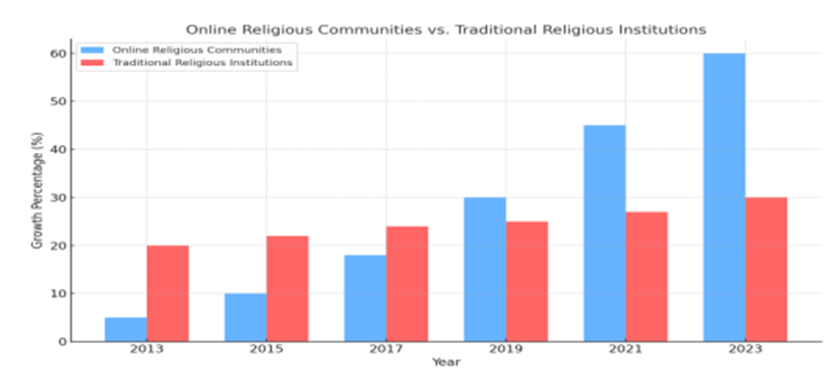
Graph 4: Online Religious Communities vs. Traditional Religious Institutions
Description: A bar chart comparing the growth of online religious communities and
traditional religious institutions in terms of membership and engagement over the past decade.
The graph shows the rise in online religious platforms and their increasing importance in
spiritual engagement
file:///C:/Users/DELL/Downloads/1-10.pdf
The Relationship Between Scientific Development and Religious Inclination
A growing body of contemporary studies and surveys indicates the existence of a complex relationship between the level of scientific advancement and religious inclination among individuals and societies. Many of these studies converge on the finding that levels of religiosity tend to decline as individuals attain higher levels of education and scientific knowledge, raising important questions about the nature of this relationship and the limits of its explanatory scope[66].
At the level of scientific elites, some statistics indicate that the proportion of individuals who do not believe in the existence of God reaches approximately 71% among physicists and 59% among chemists. When the sample is expanded to include a broader range of scientific disciplinesspanning the natural, social, and human sciences it appears that only about 39% of scientists report belief in the existence of God.
These indicators are sometimes used to support the thesis of tension between scientific knowledge and religious explanations, while also acknowledging that future scientific discoveries may reshape these proportions, either upward or downward[67].
“There are two kinds of people on earth: those who possess reason but lack religion, and those who have religion but lack reason.” [68].
— Al-Ma'arri (973–1057)
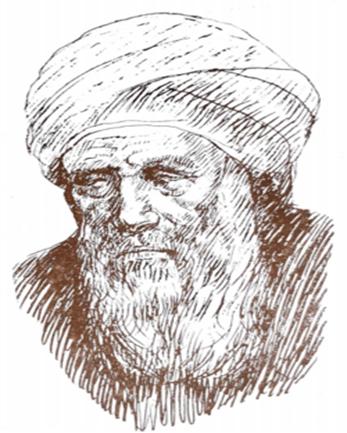
https://ar.wikipedia.org/wiki/أبو_العلاء_المعري#/media/ملف:Al-Maʿarri_by_Khalil_Gibran_(cropped).png
The complexity of this issue becomes even more apparent when analyzing specialized samples such as Nobel Prize laureates. Although the proportion of agnostics or atheists among them is estimated at around 11%, its distribution varies across disciplines: approximately 10% in medicine, 7.3% in chemistry, and 4.8% in physics, while it rises significantly in fields such as literature, reaching about 35%.
At first glance, these findings may appear inconsistent with broader trends; however, this variation calls for a methodological distinction between belief in the existence of God on the one hand, and religious affiliation or doctrinal commitment on the other. A considerable number of scientists affirm the existence of a creator without adhering to a specific religious system a position commonly referred to in philosophical literature as “deism,” which separates belief in a creator from adherence to detailed metaphysical doctrines such as the afterlife, reward, and punishment[69].
At the societal level, available data suggest a general trend whereby countries that are more advanced in scientific, economic, and political domains tend to exhibit lower levels of religiosity compared to less developed nations. However, this relationship cannot be interpreted in a deterministic manner, as it is shaped by complex historical and cultural factors.
For instance, levels of religious belief remain high in some predominantly Catholic countries in Latin America, such as Colombia and Ecuador, reaching approximately 88%, while they are significantly lower in others, such as Chile and Argentina, at around 46%. A similar pattern can be observed in Asia, where religiosity exceeds 90% in the Philippines, compared to roughly 36% in South Korea[70].
In Europe, these differences become even more pronounced. Levels of religiosity are relatively low in countries such as Denmark (9%), the United Kingdom (11%), and France and Germany (12%), whereas they are significantly higher in countries like Greece, reaching approximately 58%.
When compared to Europe, the United States presents a notable contrast, with religiosity levels reaching around 83%. Some future projections also suggest the potential expansion of more secular societies, particularly in Northern Europe, over the coming decades[71].
From the perspective of social indicators, available data show that higher levels of education are often associated with lower levels of self-reported religiosity. Approximately 83% of individuals with lower educational attainment describe themselves as religious, compared to only 49% among those with higher levels of education.
Similarly, studies indicate a comparable relationship between income and religiosity, with higher levels of religious identification observed among lower-income groups (66%) compared to higher-income groups (50%)[72].
With regard to religious practiceparticularly the performance of rituals statistical data indicate that Muslims exhibit relatively high levels of commitment to prayer, with approximately 64% reporting regular observance. However, this level of commitment varies geographically. Higher rates are observed in some Muslim-majority countries, such as Afghanistan and Iran, whereas significantly lower levels are found in other contexts, including Muslim communities in China.
A similar pattern of variation is also evident among Christians, with relatively high levels of religious practice reported in countries such as Ethiopia, Niger, Nigeria, and Mali[73].
In summary, the relationship between scientific progress and religiosity is not a simple linear one. Rather, it is a multidimensional relationship shaped by the interaction of cognitive, social, cultural, and historical factors. Accordingly, interpreting this relationship requires a critical approach that moves beyond superficial generalizations and takes into account the distinctions between belief, religiosity, religious affiliation, and different civilizational contexts.
Fourth Axis: Future Scenarios of Religious Transformation
In light of accelerating technological developments, researchers propose several scenarios regarding the future of religions in the twenty-first century:
1. Adaptation Scenario
Where religions adapt to technology by using digital media to spread their teachings and enhance their presence in the digital space.
2. Transformation Scenario
In this scenario, religions do not disappear, but they transform into individual spiritual practices rather than remaining strong social institutions.
3. Gradual Disappearance Scenario
Some researchers believe that the continuation of scientific and technological progress may lead in the long term to the decline of religion's role in public life, becoming part of cultural heritage rather than a dominant cognitive or ethical system.
Results and Conclusion
Results
Through analyzing the history of atheism and the relationship between technological progress and religious transformations in contemporary societies, a number of main results can be drawn:
Atheism as a Historical Phenomenon
The phenomenon of atheism emerged almost simultaneously with the phenomenon of belief. The idea of belief arose in ancient times based on many reasons that have been cited since its emergence. Despite the diversity and variation of this idea between monotheism or polytheism, and between the nature, form, and images of deities represented by the god of fire, thunder, or other Greek and Roman gods, the idea of belief found favor and acceptance among most people based on the same previously mentioned reasons for the emergence of religions. The most important of these, in our view, is the perpetual human need for a specific, powerful god to help his worshippers. Accordingly, the idea of atheism arose as a direct opposite to the idea of belief and as a reaction to it. However, this phenomenon was the opposite of belief in every way. It cast the reasons for belief into the abyss and denied that these reasons constitute evidence for the existence of a god. Moreover, it spread among the class of scientists, philosophers, and thinkers, in contrast to the idea of belief which spread among the common people, and it also met with rejection, hatred, and resistance from people. Atheists have faced throughout history cases of complete exclusion from society and the ruling religious authority, and they were punished with the harshest methods of torture.
The Real Numbers of Atheists Worldwide
It is worth emphasizing that the circulating figures regarding the number of atheists remain imprecise estimates; rather, in our opinion, the actual numbers exceed these estimates by many times. This disparity is attributed to a combination of complex factors, foremost among them the state of fear and anxiety that may lead some individuals to refrain from disclosing their intellectual transformation or announcing their abandonment of religions—especially in contemporary religious countries, particularly the Islamic world entirely—which keeps these transformations within the realm of secrecy and concealment. Additionally, the absence of official institutional frameworks or recognized bodies concerned with monitoring or representing this group prevents the availability of accurate and reliable statistical data at the societal and national levels.
Added to this is the conceptual problem resulting from the overlap between terms such as atheism, agnosticism, and other related intellectual trends, which increases the difficulty of classification and systematic enumeration. Furthermore, social contexts in some environments—especially those characterized by varying degrees of rejection or stigmatization—may contribute to reinforcing the tendency toward concealment among individuals, for fear of ostracism or harassment. Based on the above, any attempt to determine exact numbers remains limited by these factors and requires more sensitive and objective approaches that take into account the social and cultural complexities surrounding this phenomenon.
Technology Has Reshaped the Sources of Religious Knowledge
The spread of the internet and digital platforms has weakened the cognitive monopoly exercised by traditional religious institutions. Individuals have become able to access multiple interpretations of religious texts, in addition to accessing alternative philosophical and scientific ideas, which has enhanced intellectual pluralism in the religious sphere.
The Decline of the Social Role of Traditional Religious Institutions
With the expansion of the digital space, religious institutions are no longer the only place for social or spiritual interaction. Virtual communities have emerged that provide spaces for discussion and communication about religious and spiritual issues, which may reduce the importance of religious institutions in daily life.
The Increasing Individualism in Religiosity
Technology has contributed to enhancing individualism in shaping religious beliefs. Instead of relying on traditional religious authority, individuals have come to rely on diverse cognitive sources to form their personal understanding of religion.
Scientific Rationality as an Influencing Factor in the Decline of Traditional Religiosity
The spread of scientific knowledge through digital media has enhanced critical and rational thinking among individuals, which may lead to a reevaluation of some religious beliefs or their interpretation in new ways consistent with modern scientific knowledge.
The Transformation of Religion from a Social Institution to an Individual Spiritual Experience
Many studies indicate that technological transformations may not necessarily lead to the complete disappearance of religions, but they may contribute to transforming them from strong social institutions into individual spiritual practices that rely on personal experience more than institutional commitment.
Based on the above, the relationship between technological progress and religiosity cannot be understood solely within the binary of decline or continuity; rather, it should be analyzed as a complex process of reconfiguration. On one hand, this transformation supports Max Weber's view on the "disenchantment of the world" in terms of the decline of traditional interpretive frameworks, but on the other hand, it does not lead to the disappearance of religiosity but rather to its transformation toward more individualistic forms.
On the other hand, these results intersect with Manuel Castells' conception of the network society, where knowledge and power transfer to decentralized digital spaces. However, this research shows that this transformation is not limited to the social structure but extends to reshape the religious experience itself.
Accordingly, it can be said that religion in the digital age does not decline so much as it is reconfigured within a new network model, combining continuity and transformation simultaneously.
Conclusion
This research demonstrates that technological progress represents one of the most important factors affecting the reshaping of the relationship between humans and religion in the modern age. The digital revolution has changed patterns of knowledge and communication, which has been directly reflected in religious practices and the spiritual awareness of individuals.
However, it cannot be asserted that technology will necessarily lead to the complete disappearance of religions; rather, the future may witness profound transformations in the nature of religiosity. Religions may adapt to the new digital reality by developing new forms of religious discourse and spiritual practices that suit the technological age.
Thus, it can be said that the relationship between technology and religion is not one of absolute conflict, but rather a continuous process of interaction that may lead to the emergence of new patterns of religiosity commensurate with the social and cultural transformations of the twenty-first century.
Recommendations
Based on the research results, a set of recommendations can be presented:
The necessity of developing a contemporary religious discourse that interacts with modern technological challenges, adapts to them, and attempts to keep pace with them, based on a modern, contemporary religious discourse.
Encouraging religious institutions to benefit from modern technological means to disseminate religious knowledge and enhance communication with individuals.
Supporting academic studies that examine the relationship between technology and religion from a multidisciplinary perspective.
Enhancing dialogue between scientists and religious leaders to understand the cognitive transformations imposed by scientific and technological progress.
Examining the scientific miracles in each religion according to the modern scientific vision and attempting to crystallize them as much as possible based on the latest modern scientific facts.
Author Contribution: All authors contributed equally to the main contributor to this paper. All authors read and approved the final paper.
Declaration of generative AI and AI-assisted technologies in the writing process
The authors hereby declare that no generative artificial intelligence or AI-assisted technologies were used at any stage during the preparation of this manuscript, including language editing, proofreading, or content development. The authors take full responsibility for the originality and integrity of the work presented in this publication.
Funding: “This research received no external funding”.
Conflicts of Interest: “The authors declare no conflict of interest.” -
المراجع
References
1. Tsuria R, Campbell HA. 2020. Heidi A. Campbell, Ruth Tsuria (Eds.) - Digital Religion Understanding Religious Practice in Digital Media. Second Edition. Routledge. https://www.scribd.com/document/576021433/Heidi-A-Campbell-Ruth-Tsuria-eds-Digital-Religion-Understanding-Religious-Practice-in-Digital-Media
2. Gauchet M. 1999. The disenchantment of the world: A political history of religion. Princeton (NJ): Princeton University Press. https://press.princeton.edu/books/paperback/9780691029375/the-disenchantment-of-the world?srsltid=AfmBOor9ECsRPoOL95G0e5Jbs9Sh_I_0F332W9nd1XyLjL8ZxLri7eoI
3. Campbell, H. A. (2012). Digital religion: Understanding religious practice in new media worlds. Routledge. Link: https://www.researchgate.net/profile/Heidi-Campbell-8/publication/293958274_Digital_Religion_Understanding_Religious_Practice_in_New_Media_Worlds/links/56bcfa8408ae5e7ba40fbdf0/Digital-Religion-Understanding-Religious-Practice-in-New-Media-Worlds.pdf
4. Cheong PH. 2013. Authority. In: Campbell HA, editor. Digital religion: Understanding religious practice in new media worlds. New York: Routledge. p. 72–87.
5. Heelas P, Woodhead L. The spiritual revolution: Why religion is giving way to spirituality. Oxford: Blackwell Publishing; The British Journal of Sociology 2007 Volume 58 Issue 4 2005. https://www.academia.edu/88652372/The_Spiritual_Revolution_Why_Religion_is_Giving_Way_to_Spirituality_By_Paul_Heelas_and_Linda_Woodhead
6. Tsuria R, Campbell HA. 2020. Heidi A. Campbell, Ruth Tsuria (Eds.) - Digital Religion Understanding Religious Practice in Digital Media. Second Edition. Routledge. https://www.scribd.com/document/576021433/Heidi-A-Campbell-Ruth-Tsuria-eds-Digital-Religion-Understanding-Religious-Practice-in-Digital-Media
7. Gauchet M. 1999. The disenchantment of the world: A political history of religion. Princeton (NJ): Princeton University Press.
8. Bullivant, Stephen, and Michael Ruse (eds), The Oxford Handbook of Atheism (2013; online edn, Oxford Academic, 16 Dec. 2013), https://doi.org/10.1093/oxfordhb/9780199644650.001.0001
9. McGrath, Alister E. 1994 Christian Theology: An Introduction. Oxford: Blackwell. Link: https://www.cur.ac.rw/mis/main/library/documents/book_file/digital-65aa711508f4e3.48500607.pdf
10. Baggini, Julian 2003 Atheism: A Very Short Introduction. Oxford: Oxford University Press. https://www.religjournal.com/pdf/ijrr01002.pdf
11. Paul Edwards, “Some Notes on Anthropomorphic Theology,” Religious Experience and Truth, edited by Sidney Hook (New York: New York University Press, 1961), pp. 241-242.
12. Atheism and Agnosticism, Stanford Encyclopedia of Philosophy Archive, First published Wed Aug 2, 2017; substantive revision Tue Mar 22, 2022, Link: https://plato.stanford.edu/archives/sum2025/entries/atheism-agnosticism/?utm
13. Nathaniel Branden, “Mental Health versus Mysticism,” The Virtue of Selfishness by Ayn Rand (New York: The New American Library, 1964), p. 37. Link: https://ikesharpless.pbworks.com/f/AynRand-TheVirtueofSelfishness.pdf
14. T.S. Kuhn, The Structure of Scientific Revolutions, 2nd edn (Chicago and London: University of Chicago Press, 1970). 54–9. Link: https://www.lri.fr/~mbl/Stanford/CS477/papers/Kuhn-SSR-2ndEd.pdf
15. Why there was no ‘Darwin’s bulldog’, Thomas Henry Huxley’s famous nickname, The Linnean Society, Published on 1st July 2019,Link: https://www.linnean.org/news/2019/07/01/1st-july-2019-why-there-was-no-darwins-bulldog
16. Thomas H. Huxley, “Agnosticism,” Collected Essays (New York: D. Appleton and Co., 1894), Vol. V, pp. 237-238.
17. New Catholic Encyclopedia (New York: McGraw-Hill, 1967), Vol. 1, p. 205
18. L. Febvre, Le problème de l’incroyance au XVIe siècle: la religion de Rabelais (Paris, 1942).
19. L. Febvre, Le problème de l’incroyance au XVIe siècle: la religion de Rabelais (Paris, 1942).
20. L. Febvre, Le problème de l’incroyance au XVIe siècle: la religion de Rabelais (Paris, 1942).
21. K. Thomas, Religion and the Decline of Magic (Harmondsworth, 19732 ) 198-206 notes that sceptics were often aliens and strangers to the district.
22. K. Thomas, Religion and the Decline of Magic (Harmondsworth, 19732 ) 198-206 notes that sceptics were often aliens and strangers to the district.
23. K. Thomas, Religion and the Decline of Magic (Harmondsworth, 19732 ) 198-206 notes that sceptics were often aliens and strangers to the district.
24. Philodemus, Stanford Encyclopedia of Philosophy, First published Wed Apr 10, 2013; substantive revision Wed Jan 16, 2019, https://plato.stanford.edu/entries/philodemus/
25. P. Herc. 1428 cols. 14,32 – 15,8, cf. A. Henrichs, ‘Die Kritik der stoischen Theologie im P.Hercul. 1428’, Cronache Ercolanesi 4 (1974) 5-32 at 25; D. Obbink, Philodemus, On Piety I (Oxford, 1996) 1f.
26. Protagoras, Stanford Encyclopedia of Philosophy, First published Tue Sep 8, 2020; substantive revision Tue Sep 10, 2024, https://plato.stanford.edu/entries/protagoras/
27. Democritus, Stanford Encyclopedia of Philosophy, First published Sun Aug 15, 2004; substantive revision Sat Jan 7, 2023, https://plato.stanford.edu/entries/democritus/
28. For the problem of early titles see most recently A. Dihle, ‘ Ein früher Buchtitel’, in S. Böhm and K.-V. v. Eicksted (eds), Ithakê. Festschrift für Jörg Schäfer (Würzburg, 2001) 171-4.
29. For the problem of early titles see most recently A. Dihle, ‘ Ein früher Buchtitel’, in S. Böhm and K.-V. v. Eicksted (eds), Ithakê. Festschrift für Jörg Schäfer (Würzburg, 2001) 171-4.
30. For the problem of early titles see most recently A. Dihle, ‘ Ein früher Buchtitel’, in S. Böhm and K.-V. v. Eicksted (eds), Ithakê. Festschrift für Jörg Schäfer (Würzburg, 2001) 171-4.
31. Greene, Jim, MFA , Bellerophon, EBSCO, 2024, Link: https://www.ebsco.com/research-starters/religion-and-philosophy/bellerophon#research-starter-title
32. Teodoro Renno Assunçâo, Le mythe iliadique de Bellérophon, GAIA. Revue interdisciplinaire sur la Grèce ancienne Année 1997 1-2 pp. 41-66, Link: https://www.persee.fr/doc/gaia_1287-3349_1997_num_1_1_1332
33. Euripides, fragment 286 Kannicht, tr. Collard, slightly adapted. The last line of the fragment may not originally belong to it. For the date see C. Collard et al., Euripides, Selected Fragmentary Plays I (Warminster, 1995) 101.
34. Critias, TGrF 43 F 19I, tr. Ch. Kahn, ‘Greek Religion and Philosophy in the Sisyphus Fragment’, Phronesis 42 (1997) 247-62 at 247-8, adapted in the light of Pechstein’s translation and commentary (note 32).
35. Clement of Alexandria, Protrepticus 2.24.2.
36. Ari-Veikko Anttiroiko ,Networks in Manuel Castells’ theory of the network society , MPRA Munich Personal RePEc Archive, Anttiroiko, Ari-Veikko, University of Tampere, 2015, link: https://mpra.ub.uni-muenchen.de/65617/1/MPRA_paper_65617.pdf
37. Ludwig, David, and Charbel N El-Hani, Transformative Transdisciplinarity: An Introduction to Community-Based Philosophy (New York, NY, 2025; online edn, Oxford Academic, 26 Aug. 2025), https://doi.org/10.1093/9780197815281.001.0001
38. Alkhouri, K.I. The Role of Artificial Intelligence in the Study of the Psychology of Religion. Religions 2024, 15, 290. https://doi.org/10.3390/rel15030290
39. Alkhouri, K.I. The Role of Artificial Intelligence in the Study of the Psychology of Religion. Religions 2024, 15, 290. https://doi.org/10.3390/rel15030290
40. Alkhouri, K. I. (2025). Spiritual confusion in the era of artificial intelligence: a psychology of religion perspective. International Review of Psychiatry, 37(5), 540–553. https://doi.org/10.1080/09540261.2025.2488761
41. Barboza C. CRISPR Technology: Revolutionizing Genetic Engineering in the 21st Century. J Biochem Biotech 2024; 7(2):192 https://www.alliedacademies.org/articles/crispr-technology-revolutionizing-genetic-engineering-in-the-21st-century.pdf
42. Sheppe, Andrew P., "The Ghannouchi Test: The compatibility of religious ideas and secular democracy" (2025). Dartmouth College Master’s Theses. 244. https://digitalcommons.dartmouth.edu/masters_theses/244
43. Michael, Nwulu Nwoko, A THEOLOGICAL-ETHICAL STUDY OF JUSTICE IN DEUTERONOMY 16: 18-20 AND NATIONAL DEVELOPMENT, International Journal of Education Humanities and Social Science, Vol. 8, No. 04; 2025, DOI: https://doi.org/10.54922/IJEHSS.2025.1064
44. Religious Identity and Renewal in the Twenty-first Century Jewish, Christian and Muslim Explorations, Edited by Simone Sinn and Michael Reid Trice ,THE LUTHERAN WORLD FEDERATION, Documentation 60/2015, https://lutheranworld.org/sites/default/files/2022-02/doc_60_seattle_en_full.pdf
45. Religion and Development Towards a Sri Lankan Spirituality, Published by The Cathedral Institute for Education and Formation (CIEF), Church of Ceylon, Diocese of Colombo, 368/3A, Baudhaloka Mw, Colombo – 07, October 2024, https://jliflc.com/wp-content/uploads/2024/10/Religion-and-development-publication-FINAL-for-print-1.pdf
46. Madel Tamayo, Functions of Religion in Society, https://www.scribd.com/document/410464307/Functions-of-Religion
47. Douglas J. Davies and Michael J. Thate, Religion and the Individual: Belief, Practice, and Identity, Printed Edition of the Special Issue Published in Religions, Special Issue Editors, religions, 2017, 8, 102, https://tile.loc.gov/storage-services/master/gdc/gdcebookspublic/20/20/30/12/44/2020301244/2020301244.pdf
48. Ralph W. Hood, Jr, Peter C. Hill, Bernard Spilka, The Psychology of Religion, An Empirical Approach, THE GUILFORD PRESS, New York London, Fourth Edition, https://ndl.ethernet.edu.et/bitstream/123456789/73323/1/31.pdf.pdf
49. H. Sidky , Religion, An Anthropological Perspective , SERIES VII, THEOLOGY AND RELIGION, VOL. 348, 2015. https://www.researchgate.net/profile/Homayun-Sidky/publication/301227143_Religion_An_anthropological_perspective/links/5a65e70a0f7e9b6b8fdcba6e/Religion-An-anthropological-perspective.pdf
50. Conrad Hackett, Marcin Stonawski, Yunping Tong, Stephanie Kramer,
51. Anne Shi and Dalia Fahmy, How the Global Religious Landscape Changed From 2010 to 2020, Muslims grew fastest; Christians lagged behind global population increase, Report June 9, 2025, https://www.pewresearch.org/religion/2025/06/09/how-the-global-religious-landscape-changed-from-2010-to-2020/
52. Conrad Hackett, Marcin Stonawski, Yunping Tong, Stephanie Kramer,
53. Anne Shi and Dalia Fahmy, How the Global Religious Landscape Changed From 2010 to 2020, Muslims grew fastest; Christians lagged behind global population increase, Report June 9, 2025, https://www.pewresearch.org/religion/2025/06/09/how-the-global-religious-landscape-changed-from-2010-to-2020/
54. Conrad Hackett,Marcin Stonawski,Yunping Tong ,Stephanie Kramer, Anne Shi and Dalia Fahmy, How the Global Religious Landscape Changed From 2010 to 2020, 4. Religiously unaffiliated population change, Pew Research Center, Report, June 9, 2025 , Link: https://www.pewresearch.org/religion/2025/06/09/religiously-unaffiliated-population-change/
55. Conrad Hackett,Marcin Stonawski,Yunping Tong ,Stephanie Kramer, Anne Shi and Dalia Fahmy, How the Global Religious Landscape Changed From 2010 to 2020, 4. Religiously unaffiliated population change, Pew Research Center, Report, June 9, 2025 , Link: https://www.pewresearch.org/religion/2025/06/09/religiously-unaffiliated-population-change/
56. Conrad Hackett,Marcin Stonawski,Yunping Tong ,Stephanie Kramer, Anne Shi and Dalia Fahmy How the Global Religious Landscape Changed From 2010 to 2020, 4. Religiously unaffiliated population change, Pew Research Center, Report, June 9, 2025 , Link: https://www.pewresearch.org/religion/2025/06/09/religiously-unaffiliated-population-change/
57. Bainbridge, William Sims. 2002a. “A Prophet’s Reward: Dynamics of Religious Exchange.” In Sacred Markets, Sacred Canopies, edited by Ted G. Jelen, 63–89. Lanham, MD: Rowman and Littlefield
58. Jagodzinski, Wolfgang, and Andrew Greeley. n.d. “The Demand for Religion: Hard Core Atheism and ‘Supply Side’ Theory.” Retrieved from www.agreeley.com/ articles/hardcore.html on September 7, 2004.
59. Hayes, Bernadette C. 2000. “Religious Independents Within Western Industrialized Nations: A Socio-Demographic Profile.” Sociology of Religion 61: 191–207.
60. Finke, Roger, and Rodney Stark. 1992. The Churching of America, 1776–1990. New Brunswick, NJ: Rutgers University Press.
61. Ralph W. Hood, Jr, Peter C. Hill, Bernard Spilka, The Psychology of Religion, An Empirical Approach, THE GUILFORD PRESS, New York London, Fourth Edition, https://ndl.ethernet.edu.et/bitstream/123456789/73323/1/31.pdf.pdf
62. Nathaniel Branden, “Mental Health versus Mysticism,” The Virtue of Selfishness by Ayn Rand (New York: The New American Library, 1964), p. 37
63. Tertullian, The Prescriptions Against the Heretics, quoted in Classical Statements on Faith and Reason, edited by L. Miller (New York: Random House, 1970), pp. 3-10
64. Quoted in Walter Kaufmann, Critique of Religion and Philosophy, pp. 305-307. (First printed 1958. Reprinted by Harper Torchbooks, New York, 1972.)
65. Meer, Rudolf. "Between Old and New Teleology. Kant on Maupertuis’ Principle of Least Action " Open Philosophy, vol. 5, no. 1, 2022, pp. 265-280. https://doi.org/10.1515/opphil-2020-0196
66. Scott, M. J. (2022). Reasons Things Happen for a Reason: An Integrative Theory of Teleology. Perspectives on Psychological Science, 17(2), 452-464. https://doi.org/10.1177/1745691621995753
67. Vallentyne, P. Teleology, consequentialism, and the past. J Value Inquiry 22, 89–101 (1988). https://doi.org/10.1007/BF00135455
68. Ghazal, M. Z., & Azab, M. A. A. (2025). Sheikh Mahmoud Shukri Al-Alusi and His Stance on Contemporary Intellectual Currents: An Analytical Study in Light of the Intellectual Transformations of the Nineteenth Century. Al-Biruni Journal of Humanities and Social Sciences, 3(09). https://doi.org/10.64440/BIRUNI/BIR004
69. Wienand K, Kampschulte L, Heckl WM. Creating a foundation for origin of life outreach: How scientists relate to their field, the public, and religion. PLoS One. 2023 Feb 24;18(2):e0282243. Doi: https://doi.org/10.1371/journal.pone.0282243
70. Wienand K, Kampschulte L, Heckl WM. Creating a foundation for origin of life outreach: How scientists relate to their field, the public, and religion. PLoS One. 2023 Feb 24;18(2):e0282243. Doi: https://doi.org/10.1371/journal.pone.0282243
71. Stolz, J., de Graaf, N.D., Hackett, C. et al. The three stages of religious decline around the world. Nat Commun 16, 7202 (2025). https://doi.org/10.1038/s41467-025-62452-z
72. Haerpfer, C., et al.2022. World Values Survey: Round Seven - CountryPooled Datafile Version 5.0. https://doi.org/10.14281/18241.20
73. Stolz, J., de Graaf, N.D., Hackett, C. et al. The three stages of religious decline around the world. Nat Commun 16, 7202 (2025). https://doi.org/10.1038/s41467-025-62452-z -
تاريخ المقالة
Received : Jan 06, 2026
Revised : Jan 21, 2026
Accepted : Apr 10, 2026
-
انتماءات المؤلفين
Kenneth M. Lori1, Melinda R. Jane 2, Andrew L. George3, Dennis H. Norts 4
1 Phd, Institute of Cognition & Culture, School of History, Anthropology, Philosophy and Politics, Queen’s University Belfast, 25 University Square, Belfast BT7 1NN, UK. Email: kenneth.lori@qub.ac.uk
2 Department of Sociology, Queen’s University, Mackintosh-Corry Hall Kingston, ON, Canada. E-mail: r.melinda@queensu.ca
3 ERUNI Open Research, European Research University, Vítˇezslava Nezvala, 73601, Havirov, Czech Republic. Email: andrew.george@eruni.org
4 Department of Sociology, Purdue University, West Lafayette,IN 47907, USA. E-mail: dennis.h@purdue.edu
* Corresponding Author: Kenneth M. Lori, kenneth.lori@qub.ac.uk
-
إعلانات الأخلاق
Acknowledgment None Author Contribution All authors contributed equally to the main contributor to this paper. All authors read and approved the final paper. Conflicts of Interest “The authors declare no conflict of interest.” Funding “This research received no external funding” Ethical Considerations Ethical Considerations: Not applicable. This study did not require ethical approval because it does not include human or animal subjects and does not involve any personal or sensitive data. List of Abbrevation None Declaration of generative AI and AI-assisted technologies in the writing process The authors hereby declare that no generative artificial intelligence or AI-assisted technologies were used at any stage during the preparation of this manuscript, including language editing, proofreading, or content development. The authors take full responsibility for the originality and integrity of the work presented in this publication.
.png)
How to cite
License