* Al-Biruni Journal for Humanities and Social Sciences is committed to upholding the highest standards of publishing ethics and takes all possible measures against any publishing malpractice.
* The Editorial Board is responsible, among other things, for preventing publishing malpractice.
* Unethical behavior is unacceptable, and Al-Biruni Journal for Humanities and Social Sciences does not tolerate any form of plagiarism.
* Authors submitting articles confirm that the contents of the manuscripts are original. Furthermore, the authors' letter also indicates that the manuscript has not been previously published in any language, either in whole or in part, and is not currently being submitted for publication elsewhere. Editors, authors, and reviewers of Al-Biruni Journal for Humanities and Social Sciences must fully adhere to good publishing practice and accept responsibility for fulfilling the following duties and responsibilities as set forth in the Code of Conduct for Journal Editors.
* All submitted manuscripts undergo a rigorous peer review process by experts in the field of the particular manuscript.
* The review process is double-blind peer review.
*Factors considered in the review are scientific significance, linguistic and grammatical soundness, thoroughness of investigation, and scientific originality.
*Possible decisions include: 1. Accept, 2. Accept with revisions, or 3. Reject.
*If authors are encouraged to revise and resubmit their submission, there is no guarantee that the revised submission will be accepted.
*Rejected manuscripts will not be re-reviewed.
Publication Ethics
* All published articles must comply with accepted standards of research and publication ethics.
* Corrections, retractions, or expressions of concern will be issued as necessary to maintain the integrity of the scholarly record.
* The journal adheres to international guidelines such as those provided by COPE (Committee on Publication Ethics), ICMJE (International Committee of Medical Journal Editors), and WAME (World Association of Medical Editors).
Transparency and Accountability
The journal is committed to full transparency regarding its ethical policies. All authors and readers are encouraged to report any suspected ethical violations. The editorial board will take appropriate actions in line with international best practices.
Originality
All submitted manuscripts must be original. Manuscripts which have already been published by another journal or are being considered for publication will not be accepted. By submitting a manuscript, the author(s) acknowledge that the paper in question is not under consideration by another journal, and will not be submitted to such a journal until and unless a final written rejection decision from Al-Biruni Journal for Humanities and Social Sciences.
Authorship
The authorship listing should include the ‘lead’ author as well as all individuals who have contributed directly to the production of the work at intellectual and conceptual levels. Other individuals who have made additional contributions to the paper can be listed in the Acknowledgment section. Acknowledgment of funding sources and possible conflict of interest must also be made explicit.
Conflict of interest
Any potential or real conflict of interest must be declared to the editors. Papers received by editors of the journal or Board Members will be handled transparently and in the most appropriate way to avoid any possible bias in the review process. Editors will avoid making decisions on manuscripts that conflict with their own interest, or those addressing an issue in which they stand to gain financially. If they may have a perceived or possible conflict of interest, they should delegate handling of any decision to other editors.
Policy on Human and Animal Rights
The journal requires that all research involving human participants complies with the Declaration of Helsinki Helsinki and relevant national or institutional ethical guidelines. Authors must provide evidence of ethical approval from an appropriate review board and obtain informed consent from participants.
For research involving animals, the journal mandates adherence to recognized standards for animal care and use, including minimizing pain and suffering, and obtaining approval from relevant institutional animal care committees.
Manuscripts that do not comply with these ethical standards will not be considered for publication. Authors are also expected to declare any potential conflicts of interest related to ethical issues.
Peer review process
Manuscripts are first reviewed by the editorial office to check if they are in line with the scope of the journal and if they meet all its specific requirements. Once a manuscript successfully completes the editorial office review process it is sent for blind peer reviewing to two anonymous reviewers who have expertise and special knowledge of the subject area of the manuscript. The peer review system is double-blind so that both authors’ and reviewers’ identities are concealed. editors will approach peer reviewers “who have not previously co-published extensively with the author(s), who are for this and other reasons free of known bias in relation to the subject matter, the author(s) and/or their institutions, and who can cover, from a position of authority and peer expertise, the topic(s) dealt with in the paper concerned.” Reviewers are invited to review the manuscript by sending them the abstract of the manuscript. Upon acceptance to review the manuscript, the full text of the manuscript is sent to the reviewers after the author(s) have been concealed. Reviewers are required to provide a report in writing with clear recommendations for acceptance of the paper, with or without any revision, or rejection. If the two reports differ widely, the editor may invite a third reviewer. The reviewing process relies on the availability of qualified and expert reviewers and it may take up to 2 to 8 weeks to complete.
Accessibility
Al-Biruni Journal for Humanities and Social Sciences is an open access journal, available at no charge and the PDF versions of all papers are available on the journal’s website https://al-biruni-journal.jo This is an open access journal which means that all content is freely available without charge to the user or his/her institution. Users are allowed to read, download, copy, distribute, print, search, or link to the full texts of the articles, or use them for any other lawful purpose, without asking prior permission from the publisher or the author. All articles in this journal are published under a CC BY-SA license. Attribution-ShareAlike 4.0 International (CC BY-SA 4.0) License
Author Responsibilities
Reviewer Responsibilities:
Editor Responsibilities:
Compliance with ICMJE Recommendations
Advertising Policy
The journal accepts advertising that is relevant to its readers and consistent with its mission to advance scientific knowledge. All advertisements are subject to editorial approval, and acceptance of advertising does not imply endorsement by the journal or its editorial board.
* Independence: Advertising content is clearly distinguished from editorial content and has no influence on editorial decisions.
* Ethical Standards: Advertisements must comply with applicable laws, regulations, and ethical standards, particularly in relation to medical and healthcare products.
* Rejection Rights: The journal reserves the right to decline or remove any advertisement that is misleading, inappropriate, or conflicts with the journal’s values.
* Transparency: Sponsorships and commercial support are disclosed to maintain transparency and reader trust.
Handling Corrections, Retractions, and Expressions of Concern
The journal maintains strict procedures to uphold the accuracy and integrity of the scientific record.
Handling Corrections, Retractions, and Expressions of Concern
The journal maintains strict procedures to uphold the accuracy and integrity of the scientific record.
Noor Al Ilm for Publishing and Distribution is committed to maintaining the accuracy and integrity of the scholarly record. When an error, omission, or concern affecting a published article is identified, the journal will assess the matter and take appropriate action in accordance with the nature and seriousness of the issue.
Corrections
Corrections may be issued when an error in a published article affects the accuracy, clarity, completeness, or interpretation of the scholarly record but does not invalidate the principal findings or conclusions of the work.
Corrections may include, where appropriate:
An article may be considered for retraction when there is reliable evidence that its findings or conclusions are substantially unreliable or when serious research or publication misconduct has been established.
Grounds for retraction may include, but are not limited to:
Expression of Concern
Where a serious concern regarding a published article has been raised but the available information is insufficient to reach a final conclusion, the journal may publish an Expression of Concern while the matter is being assessed or investigated.
An Expression of Concern does not itself establish that misconduct has occurred. It serves to alert readers that the reliability or integrity of the article is under review.
Amendments to the Scholarly Record
The journal may make appropriate amendments to the published record when necessary to maintain accurate and reliable bibliographic and scholarly information.
Such amendments may include corrections to author information, affiliations, article metadata, references, figures, tables, supplementary materials, or other published information.
Changes will be documented transparently, and where appropriate, the amended record will be linked to the original publication.
Retraction Notices
When an article is retracted, the journal will publish a clear retraction notice identifying the article and explaining, where appropriate, the reason for the retraction.
The retraction will be linked to the original article, and the original publication will remain accessible as part of the scholarly record where technically and ethically appropriate, with a clear indication that the article has been retracted.
Responsibility and Review
Requests for corrections, retractions, or other amendments may be raised by authors, editors, reviewers, readers, institutions, or other relevant parties.
All requests will be assessed by the editorial team based on the available evidence. Where necessary, the journal may seek information from authors, reviewers, institutions, research-ethics bodies, or other appropriate parties.
Any individual involved in assessing a correction, retraction, or amendment who has an actual, potential, or perceived conflict of interest will not participate in the relevant decision where practicable.
Noor Al-Ilm for Publishing and Distribution is committed to ensuring that corrections, retractions, and other amendments are handled objectively, transparently, consistently, and in a manner that protects the integrity of the scholarly record. All actions are guided by international standards (e.g., COPE guidelines) COPE and are clearly communicated to authors, readers, and indexing services to preserve trust in the journal.
The journal fully adheres to the COPE guidelines on ethics and scientific integrity, and authors are required to adhere to sound research practices, including avoiding plagiarism and duplicate publication, disclosing any conflicts of interest, and obtaining necessary ethical approvals when required.
** CONSENT TO USE OF COOKIES.
LINKS.
* The Editorial Board is responsible, among other things, for preventing publishing malpractice.
* Unethical behavior is unacceptable, and Al-Biruni Journal for Humanities and Social Sciences does not tolerate any form of plagiarism.
* Authors submitting articles confirm that the contents of the manuscripts are original. Furthermore, the authors' letter also indicates that the manuscript has not been previously published in any language, either in whole or in part, and is not currently being submitted for publication elsewhere. Editors, authors, and reviewers of Al-Biruni Journal for Humanities and Social Sciences must fully adhere to good publishing practice and accept responsibility for fulfilling the following duties and responsibilities as set forth in the Code of Conduct for Journal Editors.
* All submitted manuscripts undergo a rigorous peer review process by experts in the field of the particular manuscript.
* The review process is double-blind peer review.
*Factors considered in the review are scientific significance, linguistic and grammatical soundness, thoroughness of investigation, and scientific originality.
*Possible decisions include: 1. Accept, 2. Accept with revisions, or 3. Reject.
*If authors are encouraged to revise and resubmit their submission, there is no guarantee that the revised submission will be accepted.
*Rejected manuscripts will not be re-reviewed.
Publication Ethics
* All published articles must comply with accepted standards of research and publication ethics.
* Corrections, retractions, or expressions of concern will be issued as necessary to maintain the integrity of the scholarly record.
* The journal adheres to international guidelines such as those provided by COPE (Committee on Publication Ethics), ICMJE (International Committee of Medical Journal Editors), and WAME (World Association of Medical Editors).
Transparency and Accountability
The journal is committed to full transparency regarding its ethical policies. All authors and readers are encouraged to report any suspected ethical violations. The editorial board will take appropriate actions in line with international best practices.
| *The permissible plagiarism rate is only 15%, and the use of artificial intelligence techniques is absolutely prohibited (0%) |
Originality
All submitted manuscripts must be original. Manuscripts which have already been published by another journal or are being considered for publication will not be accepted. By submitting a manuscript, the author(s) acknowledge that the paper in question is not under consideration by another journal, and will not be submitted to such a journal until and unless a final written rejection decision from Al-Biruni Journal for Humanities and Social Sciences.
Authorship
The authorship listing should include the ‘lead’ author as well as all individuals who have contributed directly to the production of the work at intellectual and conceptual levels. Other individuals who have made additional contributions to the paper can be listed in the Acknowledgment section. Acknowledgment of funding sources and possible conflict of interest must also be made explicit.
Conflict of interest
Any potential or real conflict of interest must be declared to the editors. Papers received by editors of the journal or Board Members will be handled transparently and in the most appropriate way to avoid any possible bias in the review process. Editors will avoid making decisions on manuscripts that conflict with their own interest, or those addressing an issue in which they stand to gain financially. If they may have a perceived or possible conflict of interest, they should delegate handling of any decision to other editors.
Policy on Human and Animal Rights
The journal requires that all research involving human participants complies with the Declaration of Helsinki Helsinki and relevant national or institutional ethical guidelines. Authors must provide evidence of ethical approval from an appropriate review board and obtain informed consent from participants.
For research involving animals, the journal mandates adherence to recognized standards for animal care and use, including minimizing pain and suffering, and obtaining approval from relevant institutional animal care committees.
Manuscripts that do not comply with these ethical standards will not be considered for publication. Authors are also expected to declare any potential conflicts of interest related to ethical issues.
Peer review process
Manuscripts are first reviewed by the editorial office to check if they are in line with the scope of the journal and if they meet all its specific requirements. Once a manuscript successfully completes the editorial office review process it is sent for blind peer reviewing to two anonymous reviewers who have expertise and special knowledge of the subject area of the manuscript. The peer review system is double-blind so that both authors’ and reviewers’ identities are concealed. editors will approach peer reviewers “who have not previously co-published extensively with the author(s), who are for this and other reasons free of known bias in relation to the subject matter, the author(s) and/or their institutions, and who can cover, from a position of authority and peer expertise, the topic(s) dealt with in the paper concerned.” Reviewers are invited to review the manuscript by sending them the abstract of the manuscript. Upon acceptance to review the manuscript, the full text of the manuscript is sent to the reviewers after the author(s) have been concealed. Reviewers are required to provide a report in writing with clear recommendations for acceptance of the paper, with or without any revision, or rejection. If the two reports differ widely, the editor may invite a third reviewer. The reviewing process relies on the availability of qualified and expert reviewers and it may take up to 2 to 8 weeks to complete.
The stated review times are approximate and may vary depending on reviewer availability, manuscript complexity, and editorial workload.The Al-Biruni Journal for Humanities and Social Sciences endeavors to have papers reviewed within a one to four week period where possible. The review process may, however, take longer than this. Al-Biruni Journal for Humanities and Social Sciences editors mediates the blind reviews with authors. All reviewers’ comments are sent to the author(s) who are requested to make the necessary adjustments and resubmit their manuscripts to the editors. The journal’s editors will check that all recommended changes have been substantively attended to. Authors are required to submit a report to the editors, documenting how they have responded to reviewers’ suggestions and recommendations, using the online submission.
Accessibility
Al-Biruni Journal for Humanities and Social Sciences is an open access journal, available at no charge and the PDF versions of all papers are available on the journal’s website https://al-biruni-journal.jo This is an open access journal which means that all content is freely available without charge to the user or his/her institution. Users are allowed to read, download, copy, distribute, print, search, or link to the full texts of the articles, or use them for any other lawful purpose, without asking prior permission from the publisher or the author. All articles in this journal are published under a CC BY-SA license. Attribution-ShareAlike 4.0 International (CC BY-SA 4.0) License
Author Responsibilities
- Authors must certify that their manuscript is their original work.
- Authors must certify that the manuscript has not been previously published elsewhere.
- Authors must certify that the manuscript is not currently being considered for publication elsewhere.
- Authors are obligated to provide error corrections and make any requested amendments.
- All authors named in the manuscript must have made a significant contribution to the research.
- Authors must state that all data in the manuscript are factual.
- Authors must notify the editors of any conflicts of interest.
- Authors must identify all sources used in creating their manuscript.
- Authors must report any errors they discover in their published manuscript to the editors.
Reviewer Responsibilities:
- Reviewers should maintain the confidentiality of all information related to the papers and treat them as privileged information.
- Reviews should be conducted objectively without directing any personal criticism at the author.
- Reviewers should clearly express their opinions with supporting arguments.
- Reviewers should identify relevant published works not cited by the authors.
- Reviewers should also bring to the attention of the editor-in-chief any substantial similarity or overlap between the manuscript under consideration and any other published paper of which they have personal knowledge.
- Reviewers should not review manuscripts in which they have a conflict of interest resulting from competitive, collaborative, or other relationships or ties with any of the authors, companies, or institutions associated with the papers.
Editor Responsibilities:
- Editors have full responsibility and authority to reject/accept an article.
- Editors are responsible for the overall content and quality of a publication.
- Editors must always consider the needs of authors and readers when attempting to improve a publication.
- Editors must ensure the quality of papers and the integrity of the academic record.
- Editors must publish errata pages or make corrections when necessary.
- Editors must have a clear picture of the sources of research funding.
- Editors must base their decisions solely on the importance, originality, clarity, and relevance of the paper to the scope of the publication.
- Editors must not reverse their own decisions or overrule those of previous editors without serious reason.
- Editors must maintain the anonymity of reviewers.
- Editors must ensure that all published research material complies with internationally accepted ethical guidelines.
- Editors must accept a paper only when they are reasonably certain.
- Editors should not allow any conflict of interest between staff, authors, reviewers, and board members.
- Editors must act when they identify credible concerns regarding possible research or publication misconduct, whether the manuscript is under consideration or has already been published. However, allegations or suspicions alone do not establish misconduct. Editors should assess such concerns fairly and objectively and should seek appropriate evidence and clarification before taking substantive editorial action
Compliance with ICMJE Recommendations
- This journal follows the recommendations of the International Committee of Medical Journal Editors (ICMJE) for the conduct, reporting, editing, and publication of scholarly work in medical journals, as outlined at ICMJE .
- Authors are required to prepare their manuscripts in accordance with the ICMJE Recommendations and to complete the ICMJE Conflict of Interest Disclosure Form, which can be downloaded from:Disclosure of Interest .
- The journal also adheres to the ICMJE guidelines on authorship criteria, ethical considerations in the conduct and reporting of research, clinical trial registration, and data sharing statements for clinical trials.
- All submissions are expected to comply with the highest standards of integrity and transparency as promoted by the ICMJE.
Advertising Policy
The journal accepts advertising that is relevant to its readers and consistent with its mission to advance scientific knowledge. All advertisements are subject to editorial approval, and acceptance of advertising does not imply endorsement by the journal or its editorial board.
* Independence: Advertising content is clearly distinguished from editorial content and has no influence on editorial decisions.
* Ethical Standards: Advertisements must comply with applicable laws, regulations, and ethical standards, particularly in relation to medical and healthcare products.
* Rejection Rights: The journal reserves the right to decline or remove any advertisement that is misleading, inappropriate, or conflicts with the journal’s values.
* Transparency: Sponsorships and commercial support are disclosed to maintain transparency and reader trust.
Handling Corrections, Retractions, and Expressions of Concern
The journal maintains strict procedures to uphold the accuracy and integrity of the scientific record.
Handling Corrections, Retractions, and Expressions of Concern
The journal maintains strict procedures to uphold the accuracy and integrity of the scientific record.
Noor Al Ilm for Publishing and Distribution is committed to maintaining the accuracy and integrity of the scholarly record. When an error, omission, or concern affecting a published article is identified, the journal will assess the matter and take appropriate action in accordance with the nature and seriousness of the issue.
Corrections
Corrections may be issued when an error in a published article affects the accuracy, clarity, completeness, or interpretation of the scholarly record but does not invalidate the principal findings or conclusions of the work.
Corrections may include, where appropriate:
- Factual or typographical errors.
- Errors in author names, affiliations, or other bibliographic information.
- Errors in tables, figures, references, or supplementary information.
- Other substantive errors that can be corrected without invalidating the main findings of the article.
- A published correction will clearly identify the original article and describe the correction made. The original article will remain part of the scholarly record, with the correction appropriately linked to it.
An article may be considered for retraction when there is reliable evidence that its findings or conclusions are substantially unreliable or when serious research or publication misconduct has been established.
Grounds for retraction may include, but are not limited to:
- Fabrication or falsification of data.
- Serious plagiarism or substantial unattributed use of another person's work.
- Major errors that invalidate the principal findings or conclusions.
- Duplicate or redundant publication.
- Serious ethical violations in the conduct or reporting of research.
- Significant manipulation of the publication or peer-review process.
- Other circumstances that seriously compromise the integrity or reliability of the published work.
Expression of Concern
Where a serious concern regarding a published article has been raised but the available information is insufficient to reach a final conclusion, the journal may publish an Expression of Concern while the matter is being assessed or investigated.
An Expression of Concern does not itself establish that misconduct has occurred. It serves to alert readers that the reliability or integrity of the article is under review.
Amendments to the Scholarly Record
The journal may make appropriate amendments to the published record when necessary to maintain accurate and reliable bibliographic and scholarly information.
Such amendments may include corrections to author information, affiliations, article metadata, references, figures, tables, supplementary materials, or other published information.
Changes will be documented transparently, and where appropriate, the amended record will be linked to the original publication.
Retraction Notices
When an article is retracted, the journal will publish a clear retraction notice identifying the article and explaining, where appropriate, the reason for the retraction.
The retraction will be linked to the original article, and the original publication will remain accessible as part of the scholarly record where technically and ethically appropriate, with a clear indication that the article has been retracted.
Responsibility and Review
Requests for corrections, retractions, or other amendments may be raised by authors, editors, reviewers, readers, institutions, or other relevant parties.
All requests will be assessed by the editorial team based on the available evidence. Where necessary, the journal may seek information from authors, reviewers, institutions, research-ethics bodies, or other appropriate parties.
Any individual involved in assessing a correction, retraction, or amendment who has an actual, potential, or perceived conflict of interest will not participate in the relevant decision where practicable.
Noor Al-Ilm for Publishing and Distribution is committed to ensuring that corrections, retractions, and other amendments are handled objectively, transparently, consistently, and in a manner that protects the integrity of the scholarly record. All actions are guided by international standards (e.g., COPE guidelines) COPE and are clearly communicated to authors, readers, and indexing services to preserve trust in the journal.
The journal fully adheres to the COPE guidelines on ethics and scientific integrity, and authors are required to adhere to sound research practices, including avoiding plagiarism and duplicate publication, disclosing any conflicts of interest, and obtaining necessary ethical approvals when required.
** CONSENT TO USE OF COOKIES.
By using this Site, you agree that we may collect your personal information which may be obtained by Cookiebot and that our use of such personal information will be in accordance with European Data Protection Board (EDPB)
LINKS.
Links on this Site may provide access to other Internet sites that are not maintained or controlled by Noor Al-Ilm for Publishing and Distribution. Such external Internet sites contain information created, published, maintained, or otherwise posted by organizations and entities independent of Noor Al-Ilm for Publishing and Distribution.
Noor Al-Ilm for Publishing and Distribution is not responsible for the content of those sites. Links on this Site may also provide access to other entities affiliated with Noor Al-Ilm for Publishing and Distribution.
This Agreement applies only to the Services offered at the Site. Your use of any website other than the Site will be subject to the terms and conditions posted on that website.
Noor Al-Ilm for Publishing and Distribution takes no responsibility and assumes no liability for any content posted by any third party or available on any other website or linked address. Noor Al-Ilm for Publishing and Distribution does not approve, endorse, verify, or certify any information available on any external website or linked address.
Noor Al-Ilm for Publishing and Distribution takes no responsibility and assumes no liability for the privacy practices, policies, or procedures of such third parties.
PROHIBITED ACTIVITIES
You are responsible for all of your activities and those authorized users you permit to access the Site and/or the Services through your facilities in accordance with your Access Agreement or other agreement, if applicable. You may not violate or attempt to violate the security of the Site and/or the Services. Accordingly, you shall not (a) circumvent or attempt to circumvent any security measures designed to control access to the Site and/or the Services or in any way obtain or attempt to obtain unauthorized access to or use of any elements or portion of the Site and/or the Services; (b) access data or materials not intended for you; (c) log into a server or account which you are not authorized to access; (d) attempt to probe, scan or test the vulnerability of a system or network or to breach security or authentication measures without proper authorization; (e) use this Site and/or the Services to infringe the intellectual property rights of others in any way – be advised that it is our policy to terminate the accounts of repeat infringers of copyright; (f) use this Site and/or the Services or make any attempt to penetrate, modify or manipulate this Site and/or the Services or any of “Noor Al Ilm for Publishing and Distribution’s” hardware or software in order to: invade the privacy of, obtain the identity of, or obtain any personal information about any third party; (g) attempt to interfere with service to any user, host or network, including without limitation, by submitting any harmful code, trojan horse, worm or virus to the Site and/or the Services, any denial of service attack, overloading, mailbombing or attempted crashing of the Site and/or the Services or the software or hardware used in providing the Site and/or the Services; (h) spoof or otherwise impersonate any individual or entity, or forge, delete or alter any part of TCP/IP packet header information in any e-mail or other posting; (i) create "deep links" into pages other than the front page of the Site; or (j) assist or permit any persons in engaging in any of the activities described above.
CONSEQUENCES OF UNACCEPTABLE USE.
We reserve all rights, including without limitation the right to investigate and to involve and cooperate with law enforcement authorities, and to pursue a civil lawsuit and/or criminal prosecution for any alleged or actual illegal activities involving this Site and/or any of the Services, as well as the right to terminate your access to the Site and/or the Services.
EPRESENTATIONS; WARRANTY DISCLAIMER.
Subject to the terms below, “Noor Al-Ilm for Publishing and Distribution” represents that it has the right to license the rights granted under this Agreement.
“Noor Al-Ilm for Publishing and Distribution” MAKES NO REPRESENTATION OR WARRANTY, AND EXPRESSLY DISCLAIMS ANY RESPONSIBILITY FOR LIABILITY WITH RESPECT TO YOUR USE OF THE SITE AND/OR THE SERVICES OR THE RESULTS OBTAINED FROM YOUR USE OF THE SITE OR THE SERVICES, INCLUDING, BUT NOT LIMITED TO, LIABILITY ASSOCIATED WITH ERRORS OR OMISSIONS, LIBEL, INFRINGEMENT OR VIOLATION OF RIGHTS OF PUBLICITY, PRIVACY, INTELLECTUAL PROPERTY RIGHTS, OR MORAL RIGHTS, OR THE DISCLOSURE OF CONFIDENTIAL INFORMATION.
MOREOVER, EXCEPT FOR THE EXPRESS WARRANTIES STATED HEREIN, THE SITE AND THE SERVICES ARE PROVIDED ON AN "AS IS" AND “AS AVAILABLE” BASIS, AND “Noor Al-Ilm for Publishing and Distribution” DISCLAIMS ANY AND ALL OTHER WARRANTIES, CONDITIONS, COVENANTS, OR REPRESENTATIONS (EXPRESS, IMPLIED, ORAL OR WRITTEN), RELATING TO THE SITE AND/OR THE SERVICES OR TO ANY PARTS THEREOF, INCLUDING, WITHOUT LIMITATION, ANY AND ALL IMPLIED WARRANTIES OF QUALITY, PERFORMANCE, MERCHANTABILITY OR FITNESS FOR A PARTICULAR PURPOSE. “Noor Al-Ilm for Publishing and Distribution” ALSO MAKES NO WARRANTIES RESPECTING AND SHALL HAVE NO RESPONSIBILITY FOR ANY HARM THAT MAY BE CAUSED BY THE TRANSMISSION OF A COMPUTER VIRUS, WORM, TIME BOMB, LOGIC BOMB OR OTHER SUCH COMPUTER PROGRAM OR OTHERWISE. “Noor Al-Ilm for Publishing and Distribution” FURTHER EXPRESSLY DISCLAIMS ANY WARRANTY OR REPRESENTATION TO ANY THIRD PARTY.
NOTWITHSTANDING ANYTHING HEREIN TO THE CONTRARY, “Noor Al-Ilm for Publishing and Distribution” SHALL NOT BE LIABLE FOR ANY INDIRECT, SPECIAL, INCIDENTAL, PUNITIVE OR CONSEQUENTIAL DAMAGES, INCLUDING BUT NOT LIMITED TO LOSS OF DATA, BUSINESS INTERRUPTION, OR LOSS OF PROFITS, ARISING OUT OF THE USE OF OR THE INABILITY TO USE THE SITE AND/OR THE SERVICES (EVEN IF “Noor Al-Ilm for Publishing and Distribution” HAS BEEN ADVISED OF THE POSSIBILITY OF SUCH DAMAGES). IN ADDITION, “Noor Al-Ilm for Publishing and Distribution” SHALL NOT BE LIABLE FOR ANY DAMAGES OR LIABILITY THAT RESULT OR ARISE FROM THE RESULTS OF YOUR USE OR YOUR INABILITY TO USE THE SITE AND/OR ANY OTHER PART OF THE SERVICES. BECAUSE SOME STATES OR JURISDICTIONS DO NOT ALLOW THE EXCLUSION OR LIMITATION OF LIABILITY FOR CONSEQUENTIAL OR INCIDENTAL DAMAGES, THE ABOVE LIMITATION MAY NOT APPLY TO YOU. BUT, TO THE EXTENT THE FOREGOING LIMITATIONS OF LIABILITY ARE, IN WHOLE OR IN PART, HELD TO BE INAPPLICABLE OR UNENFORCEABLE FOR ANY REASON, THEN THE AGGREGATE LIABILITY OF “Noor Al-Ilm for Publishing and Distribution” FOR ANY REASON AND UPON ANY CAUSE OF ACTION (INCLUDING, WITHOUT LIMITATION, NEGLIGENCE, STRICT LIABILITY AND OTHER ACTIONS IN CONTRACT OR TORT) ARISING OUT OF OR IN ANY WAY RELATED TO THE SITE, THE SERVICES AND/OR THIS AGREEMENT SHALL BE LIMITED TO YOUR DIRECT DAMAGES ACTUALLY INCURRED UP TO TWO HUNDRED FIFTY DOLLARS ($250).
8. INDEMNITY.
You agree to indemnify and hold “Noor Al-Ilm for Publishing and Distribution” harmless, and, at “Noor Al Ilm for Publishing and Distribution’s|” request, to defend “Noor Al-Ilm for Publishing and Distribution” from and against any claim, demand, cause of action, debt, damage, loss or liability, including reasonable attorneys’ fees, to the extent that such action is based upon, arises out of, or relates to: (i) your use of (or inability to use) this Site and/or the Services; (ii) your violation of the terms and conditions of this Agreement; (iii) the infringement by you, or any other person using your ID, Password and/or account, of any right of any person or entity; or (iv) any other activities of yours accomplished using this Site and/or the Services. You agree to cooperate as fully as reasonably required in the defense of any such claim. |Noor Al-Ilm for Publishing and Distribution|” reserves the right, at its own expense, to assume the exclusive defense and control of any matter subject to indemnification by you. This indemnity shall be in addition to and not limited by any other indemnity.
1. Ethical Approval
All research involving human participants must have been approved by an appropriate Institutional Review Board (IRB) IRB or Ethics Committee prior to commencement of the study.
Authors must state in the manuscript:
2. Informed Consent
Authors must confirm that:
“Ethics Approval and Consent to Participate.”
3. Confidentiality and Anonymity
Authors must ensure:
4. Vulnerable Populations
Research involving vulnerable groups (children, prisoners, refugees, individuals with cognitive impairments, etc.) must demonstrate:
5. Clinical Trials Registration
If applicable, clinical trials must be registered in a publicly accessible registry prior to participant enrollment (e.g., ClinicalTrials.gov or equivalent registry) TRIALS.GOV.
6. Data Protection Compliance
Research must comply with relevant data protection laws (e.g., GDPR for European research) GDPR.
7. Consequences of Non-Compliance
Failure to provide ethical documentation may result in:
Consent and Confidentiality for Human Subjects
"Al-Biruni Journal of Humanities and Social Sciences" is committed to protecting the rights, privacy, and dignity of all research participants. Authors must ensure that any research involving human participants, including interviews, surveys, focus groups, observations, or case studies, has been conducted in accordance with recognized ethical principles and applicable institutional or national regulations.
When a manuscript contains information, photographs, audio or video materials, personal narratives, or any other content that could reasonably identify an individual, authors must obtain the individual's informed written consent for publication before submission. For minors or individuals unable to provide consent, permission must be obtained from a parent, legal guardian, or other authorized representative, as required by applicable laws and regulations.
Authors must make every reasonable effort to protect the anonymity and confidentiality of participants by removing or anonymizing personally identifiable information unless explicit written consent for disclosure has been obtained. The journal may request evidence of such consent during the editorial or publication process.
Allegations of Research and Publication Misconduct
The Al-Biruni Journal of Humanities and Social Sciences takes all allegations of research or publication misconduct seriously. All such allegations will be investigated fairly, confidentially, and in a timely manner in accordance with internationally recognized ethical guidelines, including those of the Committee on Publication Ethics (COPE), where applicable.
Investigations may be conducted by the Editor-in-Chief, members of the Editorial Board, or an appointed Ethics Committee. Appropriate action will be taken based on the findings of the investigation, which may include correction, retraction, or other measures as deemed necessary.
Complaints concerning journal staff will be handled through appropriate internal institutional procedures to ensure impartiality and fairness.
Hazards and human or animal subjects
If the work involves chemicals, procedures or equipment that have any unusual hazards inherent in their use, the author must clearly identify these in the manuscript.
If the work involves the use of animal or human subjects, the author should ensure that the manuscript contains a statement that all procedures were performed in compliance with relevant laws and institutional guidelines and that the appropriate institutional committee(s) have approved them. Authors should include a statement in the manuscript that informed consent was obtained for experimentation with human subjects. The privacy rights of human subjects must always be observed.
For human subjects, the author should ensure that the work described has been carried out in accordance with The Code of Ethics of the World Medical Association (Declaration of Helsinki Helsinki ) for experiments involving humans. All animal experiments should comply with the ARRIVE guidelines ARRIVE , and should be carried out in accordance with the U.K. Animals (Scientific Procedures) Act 1986 and associated guidelines Animals (Scientific Procedures) Act 1986, or EU Directive 2010/63/EU on the protection of animals used for scientific purposes EUR-Lex, or the U.S. Public Health Service Policy on Humane Care and Use of Laboratory Animals and, as applicable, the Animal Welfare Act Animal Welfare Act.
Appropriate consents, permissions and releases must be obtained where an author wishes to include case details or other personal information or images of patients and any other individuals in an "Noor Al Ilm for Publishing and Distribution" publication. Written consents must be retained by the author and copies of the consents or evidence that such consents have been obtained must be provided to "Noor Al Ilm for Publishing and Distribution" on request16.
Reporting sex- and gender-based analyses
Reporting guidance
For research involving or pertaining to humans, animals or eukaryotic cells, investigators should integrate sex and gender-based analyses (SGBA) into their research design according to funder/sponsor requirements and best practices within a field. Authors should address the sex and/or gender dimensions of their research in their article. In cases where they cannot, they should discuss this as a limitation to their research's generalizability. Importantly, authors should explicitly state what definitions of sex and/or gender they are applying to enhance the precision, rigor and reproducibility of their research and to avoid ambiguity or conflation of terms and the constructs to which they refer (see Definitions section below). Authors can refer to the Sex and Gender Equity in Research (SAGER) guidelines and the SAGER guidelines checklist SAGER. These offer systematic approaches to the use and editorial review of sex and gender information in study design, data analysis, outcome reporting and research interpretation - however, please note there is no single, universally agreed-upon set of guidelines for defining sex and gender.
Definitions
Sex generally refers to a set of biological attributes that are associated with physical and physiological features (e.g., chromosomal genotype, hormonal levels, internal and external anatomy). A binary sex categorization (male/female) is usually designated at birth ("sex assigned at birth"), most often based solely on the visible external anatomy of a newborn. Gender generally refers to socially constructed roles, behaviors, and identities of women, men and gender-diverse people that occur in a historical and cultural context and may vary across societies and over time. Gender influences how people view themselves and each other, how they behave and interact and how power is distributed in society. Sex and gender are often incorrectly portrayed as binary (female/male or woman/man) and unchanging whereas these constructs actually exist along a spectrum and include additional sex categorizations and gender identities such as people who are intersex/have differences of sex development (DSD) or identify as non-binary. Moreover, the terms "sex" and "gender" can be ambiguous--thus it is important for authors to define the manner in which they are used. In addition to this definition guidance and the SAGER guidelines,.
Author contributions
For transparency, we require corresponding authors to provide co-author contributions to the manuscript using the relevant CRediT roles. The CRediT taxonomy includes 14 different roles describing each contributor's specific contribution to the scholarly output. The roles are: Conceptualization; Data curation; Formal analysis; Funding acquisition; Investigation; Methodology; Project administration; Resources; Software; Supervision; Validation; Visualization; Roles/Writing - original draft; and Writing - review & editing. Note that not all roles may apply to every manuscript, and authors may have contributed through multiple roles.
Changes to authorship
Authors are expected to consider carefully the list and order of authors before submitting their manuscript and provide the definitive list of authors at the time of the original submission. Any addition, deletion or rearrangement of author names in the authorship list should be made only before the manuscript has been accepted and only if approved by the journal Editor. To request such a change, the Editor must receive the following from the corresponding author: (a) the reason for the change in author list and (b) written confirmation (e-mail, letter) from all authors that they agree with the addition, removal or rearrangement. In the case of addition or removal of authors, this includes confirmation from the author being added or removed.
Only in exceptional circumstances will the Editor consider the addition, deletion or rearrangement of authors after the manuscript has been accepted. While the Editor considers the request, publication of the manuscript will be suspended. If the manuscript has already been published in an online issue, any requests approved by the Editor will result in a corrigendum.
Publication Misconduct: Reporting, Investigation and Resolution Policy
Noor Al-Ilm for Publishing and Distribution is committed to maintaining high standards of research integrity and publication ethics. Allegations or concerns regarding possible publication misconduct are taken seriously and are handled fairly, objectively, confidentially where appropriate, and in accordance with established publication-ethics principles.
Scope of Publication Misconduct
Concerns regarding publication misconduct may include, but are not limited to:
Concerns regarding possible publication misconduct may be raised by authors, reviewers, editors, readers, institutions, researchers, or other third parties.
A concern should be submitted in writing to the journal's official editorial office or designated contact address and should provide sufficient information to allow the matter to be assessed. Where available, the complainant should provide the article title, DOI or manuscript identification number, a description of the concern, and relevant supporting evidence or documentation.
Anonymous concerns may be considered where sufficient information is provided to permit a meaningful assessment.
Preliminary Assessment
Upon receiving a credible allegation or concern, the journal will conduct a preliminary assessment to determine whether the matter falls within the scope of publication misconduct and whether there is sufficient information to warrant further consideration.
An allegation or suspicion alone does not establish that misconduct has occurred. Editorial action will be based on the available evidence and the outcome of the appropriate assessment or investigation.
The journal may request clarification or supporting information from the authors or other relevant parties when appropriate.
Investigation
Where a concern warrants further investigation, the journal may conduct an editorial investigation and may seek additional information from authors, reviewers, editors, institutions, or other relevant parties.
Where the matter concerns the conduct of research or requires institutional investigation, the journal may refer the matter to the relevant author's institution, research organization, ethics committee, or other appropriate body.
The journal may pause the editorial or publication process while a serious concern is being assessed.
Resolution and Editorial Action
Following assessment or investigation, the journal may determine that:
Third-Party Concerns
Third parties may raise concerns regarding any manuscript or published article. The journal will consider credible concerns regardless of whether they are submitted by an author, reviewer, editor, reader, institution, or other party.
Third-party allegations will be assessed using the same principles of fairness, evidence, confidentiality, and due process. The identity of a complainant will be kept confidential where appropriate and where disclosure is not necessary for the investigation or required by applicable obligations.
Conflicts of Interest
Any individual involved in assessing or investigating an allegation of publication misconduct must disclose any actual, potential, or perceived conflict of interest.
An editor, reviewer, or other person with a relevant conflict of interest will not participate in the assessment or decision-making process where their involvement could compromise, or reasonably appear to compromise, the impartiality of the process.
Where practicable, the matter will be assigned to an appropriately independent editor or investigator.
Confidentiality and Fairness
Publication-misconduct allegations will be handled confidentially to the extent reasonably possible. The journal will avoid publicly presenting an allegation as an established finding before the matter has been appropriately assessed or investigated.
Authors and other relevant parties will be given a reasonable opportunity to provide clarification or supporting information when appropriate.
Noor Al-Ilm for Publishing and Distribution is committed to handling publication-misconduct concerns objectively, consistently, and transparently while protecting the integrity of the scholarly record.
Last updated: 8 August 2026
Noor Al-Ilm for Publishing and Distribution is not responsible for the content of those sites. Links on this Site may also provide access to other entities affiliated with Noor Al-Ilm for Publishing and Distribution.
This Agreement applies only to the Services offered at the Site. Your use of any website other than the Site will be subject to the terms and conditions posted on that website.
Noor Al-Ilm for Publishing and Distribution takes no responsibility and assumes no liability for any content posted by any third party or available on any other website or linked address. Noor Al-Ilm for Publishing and Distribution does not approve, endorse, verify, or certify any information available on any external website or linked address.
Noor Al-Ilm for Publishing and Distribution takes no responsibility and assumes no liability for the privacy practices, policies, or procedures of such third parties.
PROHIBITED ACTIVITIES
You are responsible for all of your activities and those authorized users you permit to access the Site and/or the Services through your facilities in accordance with your Access Agreement or other agreement, if applicable. You may not violate or attempt to violate the security of the Site and/or the Services. Accordingly, you shall not (a) circumvent or attempt to circumvent any security measures designed to control access to the Site and/or the Services or in any way obtain or attempt to obtain unauthorized access to or use of any elements or portion of the Site and/or the Services; (b) access data or materials not intended for you; (c) log into a server or account which you are not authorized to access; (d) attempt to probe, scan or test the vulnerability of a system or network or to breach security or authentication measures without proper authorization; (e) use this Site and/or the Services to infringe the intellectual property rights of others in any way – be advised that it is our policy to terminate the accounts of repeat infringers of copyright; (f) use this Site and/or the Services or make any attempt to penetrate, modify or manipulate this Site and/or the Services or any of “Noor Al Ilm for Publishing and Distribution’s” hardware or software in order to: invade the privacy of, obtain the identity of, or obtain any personal information about any third party; (g) attempt to interfere with service to any user, host or network, including without limitation, by submitting any harmful code, trojan horse, worm or virus to the Site and/or the Services, any denial of service attack, overloading, mailbombing or attempted crashing of the Site and/or the Services or the software or hardware used in providing the Site and/or the Services; (h) spoof or otherwise impersonate any individual or entity, or forge, delete or alter any part of TCP/IP packet header information in any e-mail or other posting; (i) create "deep links" into pages other than the front page of the Site; or (j) assist or permit any persons in engaging in any of the activities described above.
CONSEQUENCES OF UNACCEPTABLE USE.
We reserve all rights, including without limitation the right to investigate and to involve and cooperate with law enforcement authorities, and to pursue a civil lawsuit and/or criminal prosecution for any alleged or actual illegal activities involving this Site and/or any of the Services, as well as the right to terminate your access to the Site and/or the Services.
EPRESENTATIONS; WARRANTY DISCLAIMER.
Subject to the terms below, “Noor Al-Ilm for Publishing and Distribution” represents that it has the right to license the rights granted under this Agreement.
“Noor Al-Ilm for Publishing and Distribution” MAKES NO REPRESENTATION OR WARRANTY, AND EXPRESSLY DISCLAIMS ANY RESPONSIBILITY FOR LIABILITY WITH RESPECT TO YOUR USE OF THE SITE AND/OR THE SERVICES OR THE RESULTS OBTAINED FROM YOUR USE OF THE SITE OR THE SERVICES, INCLUDING, BUT NOT LIMITED TO, LIABILITY ASSOCIATED WITH ERRORS OR OMISSIONS, LIBEL, INFRINGEMENT OR VIOLATION OF RIGHTS OF PUBLICITY, PRIVACY, INTELLECTUAL PROPERTY RIGHTS, OR MORAL RIGHTS, OR THE DISCLOSURE OF CONFIDENTIAL INFORMATION.
MOREOVER, EXCEPT FOR THE EXPRESS WARRANTIES STATED HEREIN, THE SITE AND THE SERVICES ARE PROVIDED ON AN "AS IS" AND “AS AVAILABLE” BASIS, AND “Noor Al-Ilm for Publishing and Distribution” DISCLAIMS ANY AND ALL OTHER WARRANTIES, CONDITIONS, COVENANTS, OR REPRESENTATIONS (EXPRESS, IMPLIED, ORAL OR WRITTEN), RELATING TO THE SITE AND/OR THE SERVICES OR TO ANY PARTS THEREOF, INCLUDING, WITHOUT LIMITATION, ANY AND ALL IMPLIED WARRANTIES OF QUALITY, PERFORMANCE, MERCHANTABILITY OR FITNESS FOR A PARTICULAR PURPOSE. “Noor Al-Ilm for Publishing and Distribution” ALSO MAKES NO WARRANTIES RESPECTING AND SHALL HAVE NO RESPONSIBILITY FOR ANY HARM THAT MAY BE CAUSED BY THE TRANSMISSION OF A COMPUTER VIRUS, WORM, TIME BOMB, LOGIC BOMB OR OTHER SUCH COMPUTER PROGRAM OR OTHERWISE. “Noor Al-Ilm for Publishing and Distribution” FURTHER EXPRESSLY DISCLAIMS ANY WARRANTY OR REPRESENTATION TO ANY THIRD PARTY.
NOTWITHSTANDING ANYTHING HEREIN TO THE CONTRARY, “Noor Al-Ilm for Publishing and Distribution” SHALL NOT BE LIABLE FOR ANY INDIRECT, SPECIAL, INCIDENTAL, PUNITIVE OR CONSEQUENTIAL DAMAGES, INCLUDING BUT NOT LIMITED TO LOSS OF DATA, BUSINESS INTERRUPTION, OR LOSS OF PROFITS, ARISING OUT OF THE USE OF OR THE INABILITY TO USE THE SITE AND/OR THE SERVICES (EVEN IF “Noor Al-Ilm for Publishing and Distribution” HAS BEEN ADVISED OF THE POSSIBILITY OF SUCH DAMAGES). IN ADDITION, “Noor Al-Ilm for Publishing and Distribution” SHALL NOT BE LIABLE FOR ANY DAMAGES OR LIABILITY THAT RESULT OR ARISE FROM THE RESULTS OF YOUR USE OR YOUR INABILITY TO USE THE SITE AND/OR ANY OTHER PART OF THE SERVICES. BECAUSE SOME STATES OR JURISDICTIONS DO NOT ALLOW THE EXCLUSION OR LIMITATION OF LIABILITY FOR CONSEQUENTIAL OR INCIDENTAL DAMAGES, THE ABOVE LIMITATION MAY NOT APPLY TO YOU. BUT, TO THE EXTENT THE FOREGOING LIMITATIONS OF LIABILITY ARE, IN WHOLE OR IN PART, HELD TO BE INAPPLICABLE OR UNENFORCEABLE FOR ANY REASON, THEN THE AGGREGATE LIABILITY OF “Noor Al-Ilm for Publishing and Distribution” FOR ANY REASON AND UPON ANY CAUSE OF ACTION (INCLUDING, WITHOUT LIMITATION, NEGLIGENCE, STRICT LIABILITY AND OTHER ACTIONS IN CONTRACT OR TORT) ARISING OUT OF OR IN ANY WAY RELATED TO THE SITE, THE SERVICES AND/OR THIS AGREEMENT SHALL BE LIMITED TO YOUR DIRECT DAMAGES ACTUALLY INCURRED UP TO TWO HUNDRED FIFTY DOLLARS ($250).
8. INDEMNITY.
You agree to indemnify and hold “Noor Al-Ilm for Publishing and Distribution” harmless, and, at “Noor Al Ilm for Publishing and Distribution’s|” request, to defend “Noor Al-Ilm for Publishing and Distribution” from and against any claim, demand, cause of action, debt, damage, loss or liability, including reasonable attorneys’ fees, to the extent that such action is based upon, arises out of, or relates to: (i) your use of (or inability to use) this Site and/or the Services; (ii) your violation of the terms and conditions of this Agreement; (iii) the infringement by you, or any other person using your ID, Password and/or account, of any right of any person or entity; or (iv) any other activities of yours accomplished using this Site and/or the Services. You agree to cooperate as fully as reasonably required in the defense of any such claim. |Noor Al-Ilm for Publishing and Distribution|” reserves the right, at its own expense, to assume the exclusive defense and control of any matter subject to indemnification by you. This indemnity shall be in addition to and not limited by any other indemnity.
1. Ethical Approval
All research involving human participants must have been approved by an appropriate Institutional Review Board (IRB) IRB or Ethics Committee prior to commencement of the study.
Authors must state in the manuscript:
- The name of the approving institution
- Approval number (if applicable)
- Date of approval
Authors must confirm that:
- Written informed consent was obtained from all participants.
- For minors or legally incapable individuals, consent was obtained from legal guardians.
- Participants were informed of the purpose of the study, risks, and their right to withdraw at any time without penalty.
“Ethics Approval and Consent to Participate.”
Authors must ensure:
- No identifying personal data (names, ID numbers, photos without consent) are published.
- Data are anonymized where possible.
- Any potentially identifying information is published only with explicit written permission.
Research involving vulnerable groups (children, prisoners, refugees, individuals with cognitive impairments, etc.) must demonstrate:
- Additional safeguards
- Justification for inclusion
- Compliance with international ethical standards
If applicable, clinical trials must be registered in a publicly accessible registry prior to participant enrollment (e.g., ClinicalTrials.gov or equivalent registry) TRIALS.GOV.
Research must comply with relevant data protection laws (e.g., GDPR for European research) GDPR.
Failure to provide ethical documentation may result in:
- Rejection prior to peer review
- Retraction post-publication
- Notification to affiliated institutions
Consent and Confidentiality for Human Subjects
"Al-Biruni Journal of Humanities and Social Sciences" is committed to protecting the rights, privacy, and dignity of all research participants. Authors must ensure that any research involving human participants, including interviews, surveys, focus groups, observations, or case studies, has been conducted in accordance with recognized ethical principles and applicable institutional or national regulations.
When a manuscript contains information, photographs, audio or video materials, personal narratives, or any other content that could reasonably identify an individual, authors must obtain the individual's informed written consent for publication before submission. For minors or individuals unable to provide consent, permission must be obtained from a parent, legal guardian, or other authorized representative, as required by applicable laws and regulations.
Authors must make every reasonable effort to protect the anonymity and confidentiality of participants by removing or anonymizing personally identifiable information unless explicit written consent for disclosure has been obtained. The journal may request evidence of such consent during the editorial or publication process.
Allegations of Research and Publication Misconduct
The Al-Biruni Journal of Humanities and Social Sciences takes all allegations of research or publication misconduct seriously. All such allegations will be investigated fairly, confidentially, and in a timely manner in accordance with internationally recognized ethical guidelines, including those of the Committee on Publication Ethics (COPE), where applicable.
Investigations may be conducted by the Editor-in-Chief, members of the Editorial Board, or an appointed Ethics Committee. Appropriate action will be taken based on the findings of the investigation, which may include correction, retraction, or other measures as deemed necessary.
Complaints concerning journal staff will be handled through appropriate internal institutional procedures to ensure impartiality and fairness.
Hazards and human or animal subjects
If the work involves chemicals, procedures or equipment that have any unusual hazards inherent in their use, the author must clearly identify these in the manuscript.
If the work involves the use of animal or human subjects, the author should ensure that the manuscript contains a statement that all procedures were performed in compliance with relevant laws and institutional guidelines and that the appropriate institutional committee(s) have approved them. Authors should include a statement in the manuscript that informed consent was obtained for experimentation with human subjects. The privacy rights of human subjects must always be observed.
For human subjects, the author should ensure that the work described has been carried out in accordance with The Code of Ethics of the World Medical Association (Declaration of Helsinki Helsinki ) for experiments involving humans. All animal experiments should comply with the ARRIVE guidelines ARRIVE , and should be carried out in accordance with the U.K. Animals (Scientific Procedures) Act 1986 and associated guidelines Animals (Scientific Procedures) Act 1986, or EU Directive 2010/63/EU on the protection of animals used for scientific purposes EUR-Lex, or the U.S. Public Health Service Policy on Humane Care and Use of Laboratory Animals and, as applicable, the Animal Welfare Act Animal Welfare Act.
Appropriate consents, permissions and releases must be obtained where an author wishes to include case details or other personal information or images of patients and any other individuals in an "Noor Al Ilm for Publishing and Distribution" publication. Written consents must be retained by the author and copies of the consents or evidence that such consents have been obtained must be provided to "Noor Al Ilm for Publishing and Distribution" on request16.
Reporting sex- and gender-based analyses
Reporting guidance
For research involving or pertaining to humans, animals or eukaryotic cells, investigators should integrate sex and gender-based analyses (SGBA) into their research design according to funder/sponsor requirements and best practices within a field. Authors should address the sex and/or gender dimensions of their research in their article. In cases where they cannot, they should discuss this as a limitation to their research's generalizability. Importantly, authors should explicitly state what definitions of sex and/or gender they are applying to enhance the precision, rigor and reproducibility of their research and to avoid ambiguity or conflation of terms and the constructs to which they refer (see Definitions section below). Authors can refer to the Sex and Gender Equity in Research (SAGER) guidelines and the SAGER guidelines checklist SAGER. These offer systematic approaches to the use and editorial review of sex and gender information in study design, data analysis, outcome reporting and research interpretation - however, please note there is no single, universally agreed-upon set of guidelines for defining sex and gender.
Definitions
Sex generally refers to a set of biological attributes that are associated with physical and physiological features (e.g., chromosomal genotype, hormonal levels, internal and external anatomy). A binary sex categorization (male/female) is usually designated at birth ("sex assigned at birth"), most often based solely on the visible external anatomy of a newborn. Gender generally refers to socially constructed roles, behaviors, and identities of women, men and gender-diverse people that occur in a historical and cultural context and may vary across societies and over time. Gender influences how people view themselves and each other, how they behave and interact and how power is distributed in society. Sex and gender are often incorrectly portrayed as binary (female/male or woman/man) and unchanging whereas these constructs actually exist along a spectrum and include additional sex categorizations and gender identities such as people who are intersex/have differences of sex development (DSD) or identify as non-binary. Moreover, the terms "sex" and "gender" can be ambiguous--thus it is important for authors to define the manner in which they are used. In addition to this definition guidance and the SAGER guidelines,.
Author contributions
For transparency, we require corresponding authors to provide co-author contributions to the manuscript using the relevant CRediT roles. The CRediT taxonomy includes 14 different roles describing each contributor's specific contribution to the scholarly output. The roles are: Conceptualization; Data curation; Formal analysis; Funding acquisition; Investigation; Methodology; Project administration; Resources; Software; Supervision; Validation; Visualization; Roles/Writing - original draft; and Writing - review & editing. Note that not all roles may apply to every manuscript, and authors may have contributed through multiple roles.
Changes to authorship
Authors are expected to consider carefully the list and order of authors before submitting their manuscript and provide the definitive list of authors at the time of the original submission. Any addition, deletion or rearrangement of author names in the authorship list should be made only before the manuscript has been accepted and only if approved by the journal Editor. To request such a change, the Editor must receive the following from the corresponding author: (a) the reason for the change in author list and (b) written confirmation (e-mail, letter) from all authors that they agree with the addition, removal or rearrangement. In the case of addition or removal of authors, this includes confirmation from the author being added or removed.
Only in exceptional circumstances will the Editor consider the addition, deletion or rearrangement of authors after the manuscript has been accepted. While the Editor considers the request, publication of the manuscript will be suspended. If the manuscript has already been published in an online issue, any requests approved by the Editor will result in a corrigendum.
Publication Ethics and Editorial Policy Review and Maintenance
Noor Al-Ilm for Publishing and Distribution is committed to maintaining clear, transparent, consistent, and up-to-date publication ethics and editorial policies across all journals published by the organization.
Regular Policy Review
The publication ethics, editorial, peer-review, licensing, authorship, research integrity, and other journal policies are reviewed periodically by the relevant editorial and publishing teams.
Policies may be revised when necessary to reflect changes in publishing standards, journal practices, applicable regulations, technological developments, or recognized principles of publication ethics.
The date of the most recent policy update is indicated where appropriate.
Consistency and Accuracy
Noor Al-Ilm for Publishing and Distribution reviews its policies and journal webpages to identify and correct outdated, inconsistent, incomplete, or inaccurate information.
The information stated in the journal's policies, author guidelines, article pages, published articles, and other official journal materials is intended to remain consistent with the journal's current editorial and publishing practices.
Where a policy is revised, the updated version replaces previous versions on the official journal website, while previously published articles and historical records remain subject to the terms and conditions applicable at the time of their publication, where relevant.
Independent Editorial Policies
The policies published by "Noor Al-Ilm for Publishing and Distribution" are developed and maintained for the journals published by the organization and are intended to accurately describe their actual editorial and publishing practices.
The organization may consider internationally recognized publication-ethics principles, professional publishing standards, and guidance from relevant scholarly organizations when developing or reviewing its policies. Such principles and guidance are used as reference points and are not presented as policies of Noor Al-Ilm for Publishing and Distribution.
The organization does not represent policies, statements, or procedures belonging to third-party publishers or organizations as its own.
Responsibility for Policy Maintenance
The Editor-in-Chief, together with the relevant editorial and publishing personnel, is responsible for reviewing the journal's editorial policies and identifying areas requiring clarification or revision.
Noor Al-Ilm for Publishing and Distribution is responsible for maintaining the official versions of the policies published on its journal websites and for ensuring that policy information is reviewed and updated when necessary.
Transparency
Any substantive changes to important editorial or publication policies will be reflected on the official journal website in a timely manner.
The organization is committed to maintaining transparent, accurate, and accessible policy information for authors, reviewers, editors, readers, and indexing and abstracting services.
Noor Al-Ilm for Publishing and Distribution is committed to maintaining clear, transparent, consistent, and up-to-date publication ethics and editorial policies across all journals published by the organization.
Regular Policy Review
The publication ethics, editorial, peer-review, licensing, authorship, research integrity, and other journal policies are reviewed periodically by the relevant editorial and publishing teams.
Policies may be revised when necessary to reflect changes in publishing standards, journal practices, applicable regulations, technological developments, or recognized principles of publication ethics.
The date of the most recent policy update is indicated where appropriate.
Consistency and Accuracy
Noor Al-Ilm for Publishing and Distribution reviews its policies and journal webpages to identify and correct outdated, inconsistent, incomplete, or inaccurate information.
The information stated in the journal's policies, author guidelines, article pages, published articles, and other official journal materials is intended to remain consistent with the journal's current editorial and publishing practices.
Where a policy is revised, the updated version replaces previous versions on the official journal website, while previously published articles and historical records remain subject to the terms and conditions applicable at the time of their publication, where relevant.
Independent Editorial Policies
The policies published by "Noor Al-Ilm for Publishing and Distribution" are developed and maintained for the journals published by the organization and are intended to accurately describe their actual editorial and publishing practices.
The organization may consider internationally recognized publication-ethics principles, professional publishing standards, and guidance from relevant scholarly organizations when developing or reviewing its policies. Such principles and guidance are used as reference points and are not presented as policies of Noor Al-Ilm for Publishing and Distribution.
The organization does not represent policies, statements, or procedures belonging to third-party publishers or organizations as its own.
Responsibility for Policy Maintenance
The Editor-in-Chief, together with the relevant editorial and publishing personnel, is responsible for reviewing the journal's editorial policies and identifying areas requiring clarification or revision.
Noor Al-Ilm for Publishing and Distribution is responsible for maintaining the official versions of the policies published on its journal websites and for ensuring that policy information is reviewed and updated when necessary.
Transparency
Any substantive changes to important editorial or publication policies will be reflected on the official journal website in a timely manner.
The organization is committed to maintaining transparent, accurate, and accessible policy information for authors, reviewers, editors, readers, and indexing and abstracting services.
Publication Misconduct: Reporting, Investigation and Resolution Policy
Noor Al-Ilm for Publishing and Distribution is committed to maintaining high standards of research integrity and publication ethics. Allegations or concerns regarding possible publication misconduct are taken seriously and are handled fairly, objectively, confidentially where appropriate, and in accordance with established publication-ethics principles.
Scope of Publication Misconduct
Concerns regarding publication misconduct may include, but are not limited to:
- Plagiarism or substantial unattributed use of another person's work.
- Fabrication or falsification of research data or results.
- Manipulation or inappropriate alteration of images or research materials.
- Duplicate or redundant publication.
- Inappropriate authorship or undisclosed changes in authorship.
- Undisclosed or improperly managed conflicts of interest.
- Peer-review manipulation or interference with the peer-review process.
- Unethical research practices or failure to obtain required ethical approval.
- Misrepresentation of research findings or supporting information.
- Other serious breaches of research or publication integrity.
Concerns regarding possible publication misconduct may be raised by authors, reviewers, editors, readers, institutions, researchers, or other third parties.
A concern should be submitted in writing to the journal's official editorial office or designated contact address and should provide sufficient information to allow the matter to be assessed. Where available, the complainant should provide the article title, DOI or manuscript identification number, a description of the concern, and relevant supporting evidence or documentation.
Anonymous concerns may be considered where sufficient information is provided to permit a meaningful assessment.
Preliminary Assessment
Upon receiving a credible allegation or concern, the journal will conduct a preliminary assessment to determine whether the matter falls within the scope of publication misconduct and whether there is sufficient information to warrant further consideration.
An allegation or suspicion alone does not establish that misconduct has occurred. Editorial action will be based on the available evidence and the outcome of the appropriate assessment or investigation.
The journal may request clarification or supporting information from the authors or other relevant parties when appropriate.
Investigation
Where a concern warrants further investigation, the journal may conduct an editorial investigation and may seek additional information from authors, reviewers, editors, institutions, or other relevant parties.
Where the matter concerns the conduct of research or requires institutional investigation, the journal may refer the matter to the relevant author's institution, research organization, ethics committee, or other appropriate body.
The journal may pause the editorial or publication process while a serious concern is being assessed.
Resolution and Editorial Action
Following assessment or investigation, the journal may determine that:
- The concern is unsupported and no further action is required.
- Additional clarification or correction is required.
- The manuscript requires further editorial or peer-review assessment.
- The manuscript should be rejected where serious concerns are established before publication.
- A correction, expression of concern, or retraction may be considered for an article that has already been published.
- The relevant institution or other appropriate authority should be notified where necessary.
Third-Party Concerns
Third parties may raise concerns regarding any manuscript or published article. The journal will consider credible concerns regardless of whether they are submitted by an author, reviewer, editor, reader, institution, or other party.
Third-party allegations will be assessed using the same principles of fairness, evidence, confidentiality, and due process. The identity of a complainant will be kept confidential where appropriate and where disclosure is not necessary for the investigation or required by applicable obligations.
Conflicts of Interest
Any individual involved in assessing or investigating an allegation of publication misconduct must disclose any actual, potential, or perceived conflict of interest.
An editor, reviewer, or other person with a relevant conflict of interest will not participate in the assessment or decision-making process where their involvement could compromise, or reasonably appear to compromise, the impartiality of the process.
Where practicable, the matter will be assigned to an appropriately independent editor or investigator.
Confidentiality and Fairness
Publication-misconduct allegations will be handled confidentially to the extent reasonably possible. The journal will avoid publicly presenting an allegation as an established finding before the matter has been appropriately assessed or investigated.
Authors and other relevant parties will be given a reasonable opportunity to provide clarification or supporting information when appropriate.
Noor Al-Ilm for Publishing and Distribution is committed to handling publication-misconduct concerns objectively, consistently, and transparently while protecting the integrity of the scholarly record.
Last updated: 8 August 2026
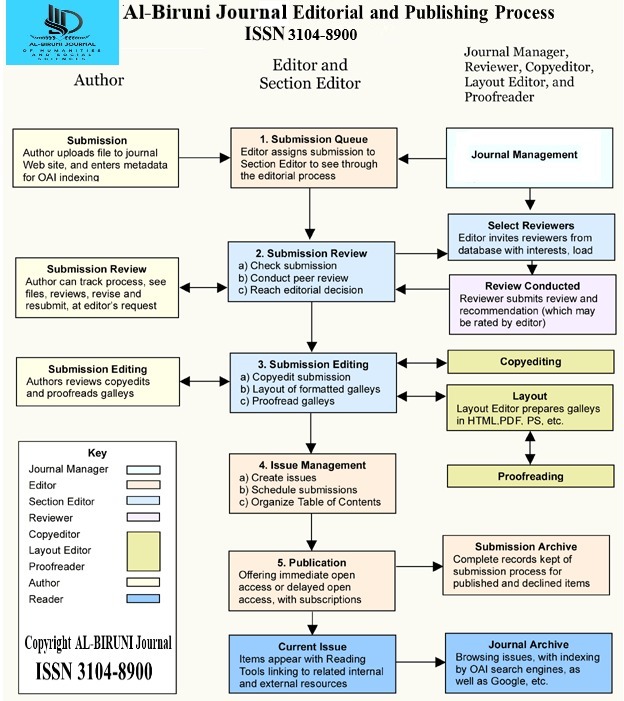
...:: About Us ::...
...:: Guidelines and Policies ::...
- Copyright Policy
- Guide for Authors
- Publication and Research Ethics
- Editorial Policy
- Reviewer Guidelines
- Data Sharing Policy
- Submission Instruction
- Open Access Policy
- Crossmark_en
- Originality and Plagiarism Policy_en
- Archiving Policy
- Digital Preservation Policy
- Advertising Policy
- Call For Editor/Reviewer
- Article Publishing Charges (APC)
...:: Articles ::...